Why Does My Dog Only Bark At One Family Member: Causes
Why does my dog only bark at one family member? Learn the common causes and practical ways to reduce fear, anxiety, and unwanted barking.
Your dog may bark at one family member because of fear, learned habits, scent, movement, or a past unpleasant experience.
When your dog barks at only one person in the home, it can feel personal and confusing. In most cases, the barking is not spite or a sign that your dog “hates” that family member. It is a form of communication, and careful observation can reveal whether your dog feels afraid, excited, protective, unsure, or simply reinforced for barking.
Why does my dog only bark at one family member?
Dogs notice small details that people often miss. They may react to a person’s voice, walk, clothing, body language, smell, or daily routine. This helps explain why does my dog only bark at one family member while acting calm around everyone else.
The barking may also come from one specific event. A family member may have accidentally startled the dog, stepped on a paw, taken away a toy, or used a loud voice. Even one unpleasant moment can create a strong association, especially in a nervous or sensitive dog.


Common causes include:
• Fear or uncertainty around that person
• Excitement that has become too intense
• Guarding a room, sofa, food bowl, or favorite person
• A difference in voice, posture, clothing, or movement
• A learned pattern that gets attention
• Pain, hearing loss, vision loss, or another health issue
• Frustration caused by barriers such as doors, gates, or furniture
Barking is not always aggressive. The meaning depends on the whole body. A loose body, wagging tail, and play bow may show excitement. A stiff body, hard stare, tucked tail, raised hackles, growling, or snapping signals a higher level of concern.

Fear and uncertainty are common reasons
Fear is one of the most common reasons a dog barks at one family member. The dog may not understand that the person is safe. Barking creates distance, much like an alarm bell that says, “Please move away.”
Dogs may fear a person who:
• Walks with a cane, walker, or unusual stride
• Wears a hat, hood, uniform, or bulky coat
• Has a deep or loud voice
• Moves quickly or reaches over the dog
• Uses strong perfume, smoke, or chemical scents
• Comes home at a different time than other family members
• Handles stressful tasks such as nail trims or medication
This does not mean the person has done something wrong. Dogs process the world through smell, sound, sight, and body language. A detail that seems harmless to us may feel strange to them.
Watch what happens before the bark. Does the dog move away, lower the body, lick the lips, yawn, pin the ears back, or hide? These are often early stress signals. If the dog stays stiff and keeps its weight forward, the behavior may be more defensive and needs careful management.

Your dog may have learned that barking works
Dogs repeat behavior that produces a result. If your dog barks and the family member backs away, speaks loudly, or leaves the room, the dog may learn that barking is effective. From the dog’s point of view, the alarm worked.


Attention can reinforce barking, too. Some dogs bark at one person because that person talks to them, plays, or reacts each time. Even scolding can reward the behavior by giving the dog interaction.
This is why does my dog only bark at one family member even when there is no clear fear? The answer may be a habit built through repeated interactions.
Avoid rewarding the pattern by:
• Shouting at the dog
• Pushing the dog away
• Staring into the dog’s eyes
• Forcing the dog to accept petting
• Laughing or making the barking exciting
• Asking the targeted person to approach during a barking episode
Instead, reward calm behavior before barking starts. A quiet glance, relaxed body, or step away from the person can earn a small treat. This teaches the dog that calm choices work better than loud ones.

Body language can reveal the real cause
The bark alone does not tell the full story. A dog may use the same bark for fear, frustration, excitement, or guarding. Look at the dog’s ears, tail, mouth, eyes, posture, and movement.
A dog that feels afraid may show:
• A tucked tail
• Ears held back
• Lip licking or yawning
• Avoidance or hiding
• A lowered body
• Trembling or sudden stillness
A dog that is excited may show:
• A loose, wiggly body
• A high, fast-moving tail
• Play bows
• Small jumps
• Quick movement toward the person
• A bark followed by an attempt to play
A dog that is guarding may show:
• A stiff posture
• Blocking access to a person or space
• A hard stare
• Growling
• Standing between people
• Increased barking near food, toys, furniture, or doorways
These signs can overlap. A professional trainer or veterinary behaviorist can help when the signals are unclear. Never judge risk by the tail alone. A wagging tail can occur during stress or arousal.



Could the family member’s behavior be the trigger?
Sometimes the targeted person unknowingly creates a stronger reaction. This does not mean blame is helpful. It simply gives the family a useful place to start.
Ask these questions:
• Does this person approach the dog directly?
• Do they bend over the dog or reach toward its head?
• Do they touch the dog while it is eating or resting?
• Do they use a louder voice than others?
• Do they move quickly through the home?
• Do they often take away toys or end play?
• Do they handle grooming, medication, or discipline?
Direct staring and leaning over a dog can feel threatening. Many dogs prefer a person to turn slightly sideways, keep the hands low, and allow the dog to approach.
The family member should avoid forcing contact. Sitting quietly while tossing treats to the side can feel safer than holding a treat near the face. The dog should be free to move away. Choice helps lower pressure.

How to stop a dog from barking at one family member
The safest approach is gradual behavior change. The goal is not to punish the bark. The goal is to change the dog’s emotional response to the person.
Use this step-by-step plan:
-
Find the dog’s comfort distance. Start far enough away that the dog notices the person but does not bark, lunge, or freeze.
-
Have the family member stand or sit quietly. They should avoid staring, calling the dog, or reaching out.
-
Give the dog a high-value treat as soon as it notices the person. Chicken, turkey, or a favorite soft treat may work better than dry food.
-
Wait for the dog to relax. Look for a softer body, slower breathing, or a turn toward the handler.
-
Repeat short sessions. End while the dog is still calm.
-
Reduce the distance very slowly. Move closer only when the dog remains relaxed across several sessions.
-
Add normal movement later. The person can stand, walk a few steps, or speak softly when the dog is ready.
-
Reward calm behavior every time. Consistency matters more than speed.


This process is called desensitization and counterconditioning. It pairs the person with good outcomes while keeping the dog below its reaction point. If the dog barks, the step was too hard. Increase distance and try again.

What the targeted family member should do
The person who receives the barking should become calm, predictable, and nonthreatening. This can change the dog’s expectations over time.
Helpful actions include:
• Turn slightly sideways instead of facing the dog head-on
• Avoid reaching over the dog’s head
• Speak softly and move slowly
• Toss treats without trying to touch the dog
• Give the dog space near beds, crates, food, and toys
• Allow the dog to approach first
• Stop the interaction if the dog becomes tense
Do not corner the dog or force it to accept petting. Do not pull the dog toward the person for a “meet and greet.” Forced contact often increases fear and can lead to a bite.
One practical lesson from behavior work is that progress is easy to miss because it looks quiet. A dog that notices a person and then looks away is already making progress. That calm choice deserves attention and reward.
Manage the home while you train
Training works best when the dog does not rehearse the barking all day. Management reduces stress and prevents the behavior from becoming stronger.
Try these steps:
• Use baby gates to create space
• Keep the dog on a leash during difficult routines
• Provide a quiet bed or crate area
• Ask visitors and family members to ignore the dog at first
• Remove high-value toys during tense interactions
• Feed the dog in a calm, private area
• Use white noise if outside sounds increase barking
• Give the dog exercise and rest before busy family times
Management is not a cure by itself. It is a safety tool that gives training a better chance to work. Think of it as lowering the volume before trying to teach a new song.
Avoid punishment-based tools such as shock collars, spray collars, or harsh leash corrections when fear may be involved. Research and veterinary behavior guidance support reward-based methods because punishment can increase fear, stress, and defensive behavior.
Rule out pain or health problems
A sudden change in barking deserves attention. Pain can make a normally friendly dog react to touch, movement, or approach. Hearing or vision changes can also make a familiar person seem surprising.
Contact your veterinarian if the barking is new, intense, or paired with:
• Growling or snapping
• Trouble walking
• Sensitivity to touch
• Confusion or staring
• Nighttime restlessness
• Changes in appetite or sleep
• Loss of house training
• Sudden fear of familiar places or people
Older dogs may develop cognitive changes that affect recognition and behavior. Ear disease can also alter hearing and increase startle responses. A health check cannot explain every case, but it is an important first step when the behavior changes without warning.
Do not assume the issue is purely training-related until medical causes are considered. A veterinarian can examine the dog and recommend a qualified behavior professional when needed.

When barking may signal aggression
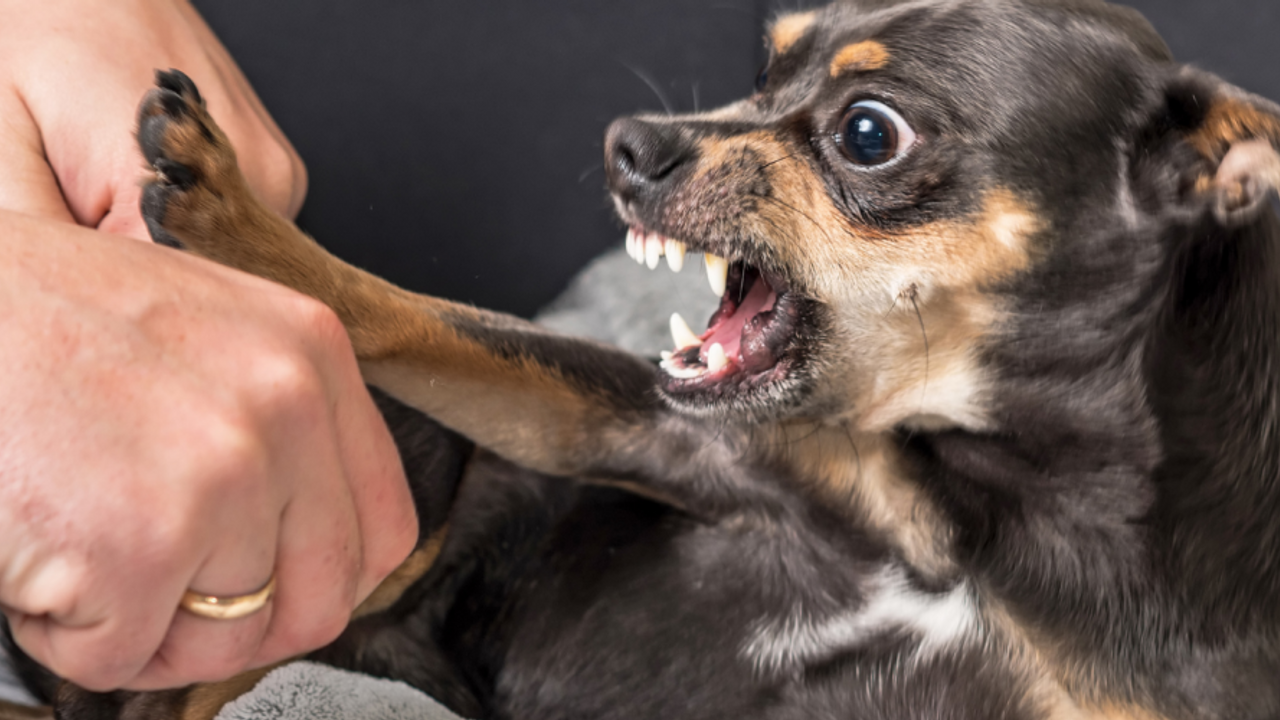
Barking becomes more concerning when it includes a stiff body, lunging, snapping, biting, or repeated attempts to chase the person. A dog does not need to bite before the family takes the behavior seriously.
If the dog shows these signs:
• Keep the dog and person separated with doors or gates
• Avoid punishment and physical restraint when possible
• Do not test the dog’s tolerance
• Keep children away during training
• Use a qualified reward-based trainer
• Ask your veterinarian about a veterinary behaviorist
• Consider basket muzzle training with professional guidance if bite risk exists
A muzzle should never be used as punishment or left on an unsupervised dog. Proper conditioning helps the dog view it as normal and safe.
Professional help is especially important when the dog has a bite history, guards a person or room, or cannot eat treats around the targeted family member. Early support usually makes behavior change easier.
Mistakes that can make the barking worse
Many loving owners respond in ways that seem reasonable but increase stress. The most common mistake is forcing the dog to stay near the person until it “gets used to it.” Flooding can overwhelm the dog and make the fear stronger.
Other mistakes include:
• Punishing every bark without teaching a new behavior
• Moving too close too soon
• Rewarding the dog after it has escalated
• Letting several people train at once
• Ignoring early stress signals
• Changing the plan from day to day
• Assuming a wagging tail means the dog is comfortable
• Allowing children to approach during barking
A simple training log can help. Write down the time, trigger, distance, body language, bark intensity, and recovery time. Patterns often become clear after several days.
For example, you may discover that why does my dog only bark at one family member is really “why does my dog bark when that person enters the kitchen while the dog has a chew?” That detail leads to a much better solution.
How long does behavior change take?
Every dog is different. A mild habit may improve within days or weeks. Fear, guarding, pain, or a bite history may require months of careful work.
Progress is usually uneven. Your dog may improve at home but struggle when the person wears a coat or moves quickly. That is normal. Behavior must be practiced in many settings, but each new challenge should be added slowly.
Measure progress by small signs:
• The dog notices the person sooner without barking
• The dog recovers faster after a surprise
• The dog accepts treats in the person’s presence
• The dog chooses to move away instead of rushing forward
• The dog can relax in the same room
Do not focus only on whether the barking has stopped. Emotional comfort comes first. A quiet dog that remains tense is not fully relaxed yet.
PAA-style questions about one-person barking
Why does my dog only bark at one family member?
Your dog may associate that person with fear, excitement, guarding, or a past unpleasant event. Differences in voice, movement, scent, clothing, and daily interactions can also trigger barking.
Is my dog barking at one person because it dislikes them?
Usually, no. Barking often shows stress, uncertainty, excitement, or a learned response rather than dislike or revenge.
Should the family member ignore the dog?
Ignoring the dog can help when the barking seeks attention, but fear-based barking needs more than ignoring. The person should give space, avoid direct pressure, and pair their presence with calm rewards.
Should I punish my dog for barking at a family member?
Punishment can increase fear and may make aggressive responses more likely. Use distance, management, reward-based training, and professional help when needed.
Can a veterinarian help with this problem?
Yes. A veterinarian can check for pain, hearing loss, vision problems, or other health issues. They can also refer you to a qualified behavior expert.
What if my dog tries to bite the family member?
Separate the dog and person at once, prevent further exposure, and contact a veterinarian or qualified veterinary behavior professional. Do not attempt close-contact training without a clear safety plan.
Conclusion
Why does my dog only bark at one family member? The cause may be fear, excitement, guarding, learned behavior, sensory differences, or a health problem. The bark is a clue, not a complete answer.
Watch the dog’s body language, identify the trigger, prevent repeated reactions, and use slow reward-based training. Never force contact or punish a fearful dog. If there is growling, lunging, snapping, or a bite risk, seek professional help early.
With patience and a clear plan, many dogs learn that the targeted family member is safe. Start with one calm session today, track small improvements, and explore trusted veterinary behavior resources for continued support.

Pet Care Writer & Researcher
Daniel writes practical guides on daily care, feeding, and safety, turning complex topics into simple, actionable advice.