Why Don’t Wolves Bark: The Truth Behind Wolf Sounds
Why don’t wolves bark like dogs? Learn how wolf communication, evolution, and social behavior explain their unique vocalizations.
Wolves rarely bark because their social lives favor howls, whines, growls, and body signals.
The question “why don't wolves bark” has a more interesting answer than many people expect. Wolves can bark, but they use this sound far less often than domestic dogs. Their voices, body language, scent marks, and group behavior work together as one rich communication system. This guide explains when wolves bark, why howling matters more, and what wolf behavior can teach us about dogs and wild canids.

Can wolves bark?
Yes, wolves can bark. Their vocal cords and airways allow them to make short, sharp barks just as dogs do.
However, a wolf bark is not usually a long, repeated sound. It is often mixed with a growl, whine, or howl. A wolf may bark to warn its pack, react to danger, protect a den, or show alarm.
So, the better question is not only “why don't wolves bark?” It is also, “When do wolves decide barking is useful?”
Wolves use sound based on the situation. A soft whine may comfort a pup. A growl may warn another wolf to back away. A howl may bring pack members together across a great distance. A bark may signal immediate danger near the den.
The important point is that wolves do not lack the ability to bark. They simply have a different communication style from most domestic dogs.
Why don't wolves bark like dogs?
The main reason wolves do not bark like dogs is that their lives and needs are different. Domestic dogs live near people, homes, roads, and other dogs. They often bark to guard property, ask for food, seek attention, or respond to sounds.
Wolves live in wild territories. Their survival depends on quiet movement, careful hunting, and close pack bonds. Loud, repeated barking may reveal their location to prey, rivals, or threats.
Several factors help explain why wolves bark less:
• Wolves use howls to communicate across large territories.
• They use scent to mark borders and share information.
• Their body language helps maintain pack order.
• They often avoid drawing attention to their den or pups.
• Natural selection favored signals that fit life in the wild.
A domestic dog is like a town messenger. It reacts to many small events around the home. A wolf is more like a radio operator in a remote area. It saves strong signals for moments when they matter most.
This helps answer why don't wolves bark without suggesting that wolves are silent. They are vocal animals, but their sounds are chosen with care.
What sounds do wolves make?
Wolves use several main vocal sounds. Each one can carry a different message, although meaning depends on context, posture, age, and the relationship between the animals.
Howls
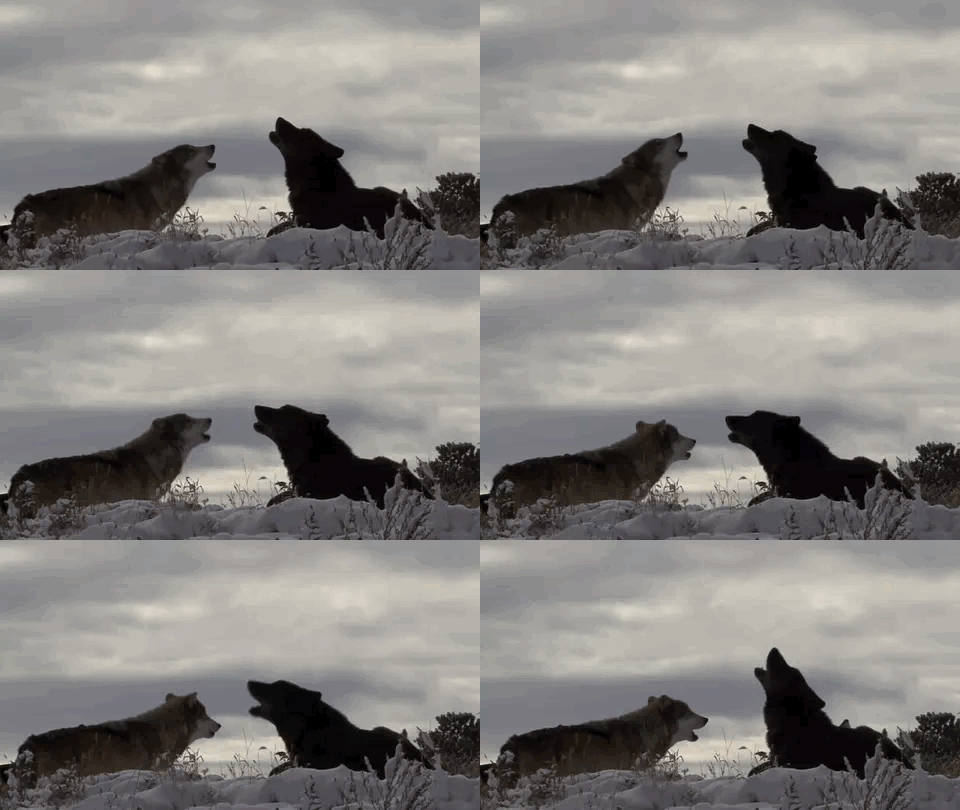
Howling is the best-known wolf sound. A howl can help pack members find one another, gather before travel, or defend a territory.
A wolf howl can travel over long distances. This makes it more useful than a bark when animals are spread across forests, mountains, or open plains.
Howling also supports social bonding. Pack members may howl together, creating a chorus that tells nearby wolves the group is present and united.
whines
whines often appear in friendly or dependent situations. Pups may whine when they are hungry, cold, or separated from their mother.
Adult wolves may also whine during greetings or when showing submission. The sound can reduce tension because it signals that the wolf is not seeking a fight.
Growls
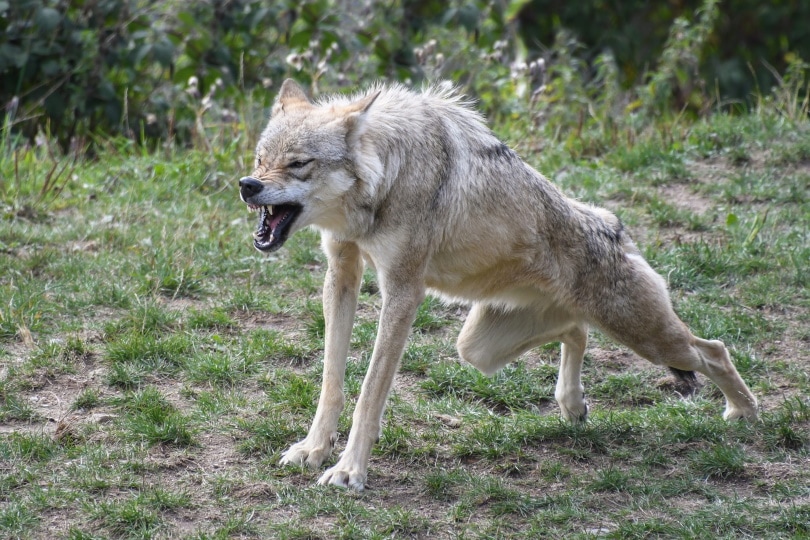
A growl is a warning sound. Wolves may growl when guarding food, defending a den, or setting a personal boundary.
A growl does not always mean an attack will follow. It often means, “Stay back.” Other wolves may respond by moving away or changing their posture.
Yelps
A yelp can show pain, fear, surprise, or sudden distress. Young wolves may yelp during play when another wolf bites too hard.
These sounds work with movement. A lowered head, tucked tail, raised hackles, or direct stare can change the meaning of a vocal signal.

When do wolves bark?
Wolves may bark in a few clear situations. Researchers and wildlife observers have recorded barking during alarm, defense, and high excitement.
A wolf may bark:
• When it detects a threat near the pack
• When it guards a den or young pups
• When it is surprised at close range
• During tense interactions with another wolf
• In captivity, where human activity creates unusual stress
Wolf pups may bark more often than adults. Young animals are still learning how to communicate, and their vocal behavior can be less controlled.
A bark can also join with a growl. This creates a harsh sound that may warn a predator or rival. In this case, the bark is not a casual greeting. It is part of a serious message.
This is another key to understanding why don't wolves bark. Barking is possible, but it is often linked to a specific event rather than used as a constant background sound.

How does wolf communication compare with dog communication?
Wolves and dogs share a common ancestor, so their vocal systems are related. Still, thousands of years of domestication changed how dogs communicate.
People selected dogs for many tasks. Some dogs needed to alert people. Others needed to herd, guard, hunt, or work closely with handlers. Barking became useful in many of these roles.
Dogs also live in human environments. They hear doorbells, cars, voices, appliances, and neighborhood animals. Barking helps them respond to these repeated social and environmental triggers.
Wolves face a different set of pressures. They need to:
• Coordinate movement across a large home range
• Protect food and young
• Avoid unnecessary fights
• Find pack members at a distance
• Warn rivals without constant noise
Domestic dogs may bark because barking has been rewarded. A dog barks at a door, and a person opens it. A dog barks for play, and someone throws a ball. Over time, the behavior becomes stronger.
Wolves do not usually receive these human rewards. Their signals remain shaped by pack life and wild conditions.
This does not mean dogs are noisy versions of wolves. Dogs have developed their own communication habits, and barking can be normal for them.
Is barking useful for a wolf?
Barking can be useful, but only in the right setting. A short bark near a den may alert the pack to danger. A bark during conflict may tell another wolf to stop.
Yet barking also has limits. It does not travel as smoothly over long distances as a howl. Repeated barking can use energy and attract attention. It may also make it easier for prey or rivals to locate the wolf.
A wolf’s communication system works best when each signal has a clear purpose. Howling covers distance. Scent marks last over time. Body signals work at close range. Barking handles sudden danger.
This division of labor helps explain why don't wolves bark often. Their other signals may do the job better.
Do wolves bark to communicate with humans?
Wolves may bark when humans are nearby, especially in captivity or during stressful encounters. However, they do not usually bark to communicate with people in the same flexible way that domestic dogs do.
A captive wolf may learn that humans control food, space, or access to other animals. This can change its behavior. Stress, boredom, fear, and artificial surroundings may also increase unusual vocal patterns.
Wild wolves normally avoid people. If one is close enough to bark, the situation deserves caution. It may feel threatened, protect young, or react to a sudden movement.
Never approach a wild wolf to test whether it will bark. Keep your distance, do not feed it, and report unusual behavior to local wildlife officials.
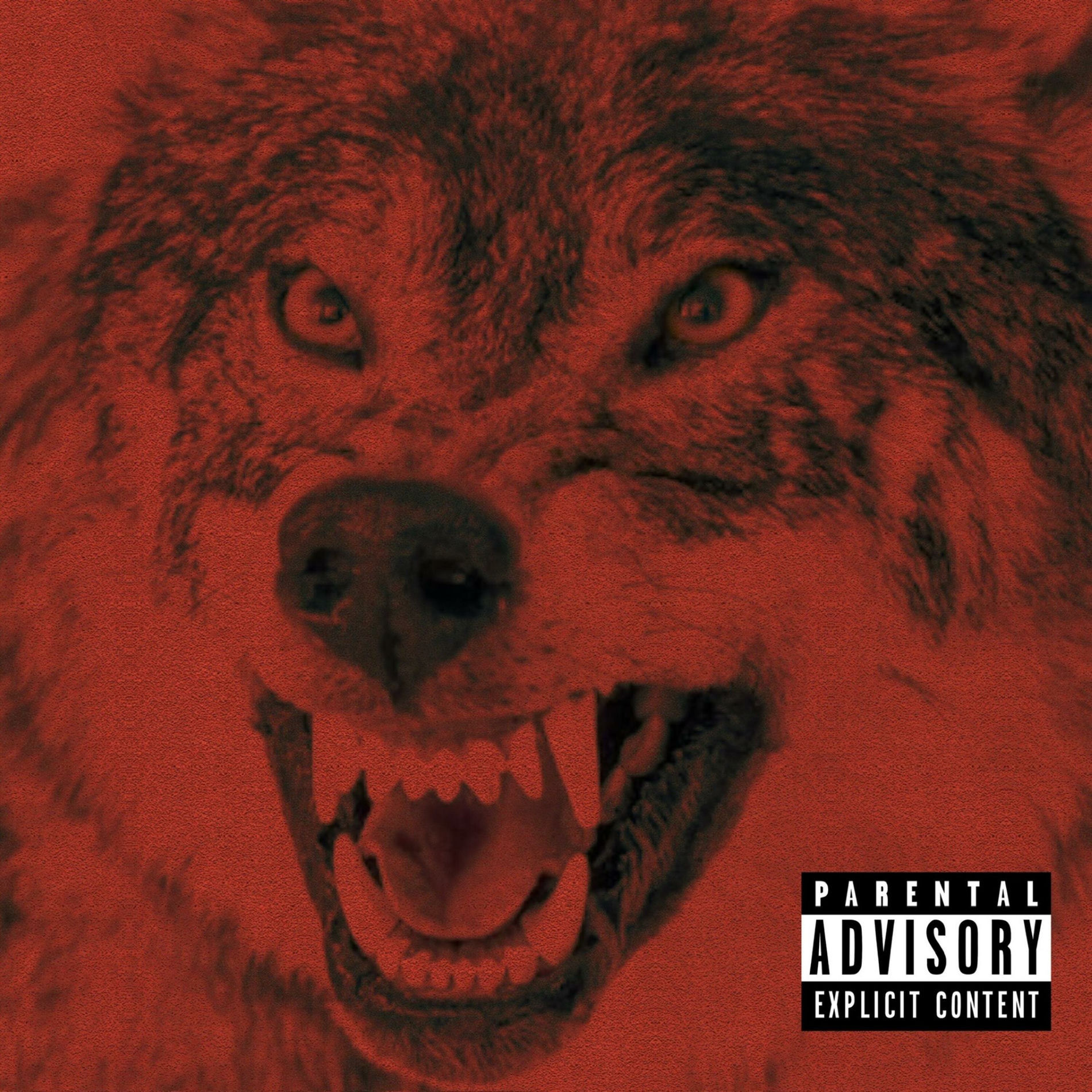
Do wolves bark more in captivity?
Captivity can affect wolf vocal behavior. A captive wolf lives in a setting that differs from its natural territory. It may hear people, vehicles, gates, and unfamiliar animals throughout the day.
These conditions can create stress or excitement. Some captive wolves may bark more than wild wolves, especially during feeding, handling, or territorial tension.
Still, captivity does not turn every wolf into a frequent barker. Age, personality, health, enclosure design, social group, and past experience all matter.
This is why behavior comparisons need care. A wolf in a zoo is not a perfect model for a wolf living in a remote forest. Researchers must consider the animal’s environment before drawing conclusions.

Do wolves bark to warn their pack?
Sometimes, yes. A wolf may use a bark as a short alarm signal when it sees danger nearby.
The bark may quickly gain attention, while body posture shows the type of threat. A wolf that faces forward with raised fur may appear defensive. A wolf that retreats while barking may be frightened rather than ready to fight.
Pack members also use smell, sight, and movement to understand what is happening. A bark is only one piece of the message.
Wolf communication is not like a dictionary in which every sound has one fixed meaning. The same sound can change meaning based on location, timing, and social relationships.
Why do wolf pups bark?
Wolf pups are more vocal than many adult wolves. They may bark, whine, yelp, or make soft calls when they need care.
Puppies depend on adults for warmth, food, safety, and transport. Vocal sounds help them attract attention when they are separated from the den group.
Play can also produce barking. Young wolves practice chasing, biting, wrestling, and social rules. A bark or yelp may stop rough play or invite another pup to continue.
As wolves mature, their communication becomes more controlled. Adults learn when to stay quiet and which sound fits each situation.
This age difference is useful when asking why don't wolves bark. The answer often changes depending on whether the wolf is a pup, an adult, wild, or captive.
Does barking reveal a wolf’s emotion?
Barking can provide clues, but it does not reveal a wolf’s exact emotion by itself. A bark may reflect alarm, fear, excitement, defense, or conflict.
To read the signal, observe the full animal:
• Is the tail high, low, or tucked?
• Are the ears forward or pressed back?
• Is the wolf moving toward the sound or away from it?
• Are the teeth visible?
• Are other wolves gathering or retreating?
Wildlife experts avoid making strong claims from one sound alone. Good behavior analysis uses repeated observations and the animal’s setting.
This is a practical lesson for anyone watching wolves in a sanctuary or natural area. Do not label every bark as aggression. Look for the whole pattern, and give the animal plenty of space.
Common myths about wolf barking
Several popular myths make wolf communication seem simpler than it is.
Myth 1: Wolves never bark
False. Wolves can bark, and observers have documented barking in wild and captive animals.
Myth 2: Wolves only howl
False. Wolves use howls, barks, growls, whines, yelps, scent marks, facial signals, and body positions.
Myth 3: A wolf bark sounds exactly like a dog bark
Not always. Wolf barks may be shorter, rougher, or blended with growling and other sounds.
Myth 4: Barking means a wolf wants to attack
Not necessarily. Barking may signal surprise, fear, defense, or an attempt to warn others.
Myth 5: A quiet wolf is friendly
This is unsafe. A wolf can remain quiet while feeling stressed or defensive. Silence should never be treated as an invitation to approach.
These myths matter because poor interpretations can lead to unsafe wildlife encounters. Respect the animal’s space and let trained professionals explain behavior in context.
What scientists know about wolf communication
Studies of gray wolves show that communication is both vocal and social. Wolf packs rely on cooperation, and signals help maintain relationships, coordinate travel, and protect resources.
Research on wolf howling has examined individual identity, group size, distance, and social bonds. A howl may carry information about who is calling and where that animal is located.
Behavioral studies also show that wolves use scent marking to communicate over time. A scent mark can remain after the wolf has moved on, making it useful for territory and social information.
There are limits to current knowledge. A wolf’s sound can change with age, region, season, health, and social setting. Recordings alone cannot always reveal meaning, so researchers combine sound analysis with direct observation.
That careful approach gives us a reliable answer to why don't wolves bark: wolves can bark, but barking is only one small part of a flexible communication system.
What should you do if you hear a wolf bark?
Hearing a bark in wolf country does not mean you should search for the animal. Treat the sound as a reason to stay alert and create distance.
Follow these steps:
-
Stay calm and keep children and pets close.
-
Do not run toward the sound.
-
Move away slowly while facing the animal’s direction.
-
Avoid feeding, calling, or imitating the wolf.
-
Report a close or repeated encounter to local wildlife staff.
-
Keep dogs leashed in areas where wolves live.
A wolf that avoids you is behaving normally. Give it a clear escape route, and do not block its path.
Frequently Asked Questions About Why Don't Wolves Bark
Can wolves bark like dogs?
Yes, wolves can bark, but they usually bark less often than domestic dogs. Their barks may be short and may blend with growls or other sounds.
Why don't wolves bark as much as dogs?
Wolves rely more on howls, scent marks, and body language. Their wild lifestyle rewards quiet movement and signals that fit long-distance pack communication.
Do wolves bark when they are scared?
They can. A frightened wolf may bark, yelp, growl, or retreat, depending on the threat and its distance from the danger.
Do wolf pups bark?
Yes, wolf pups may bark, whine, and yelp to attract care or communicate during play. Young wolves often make more varied sounds while learning social behavior.
Do wolves bark at humans?
Wolves may bark at people during stress, surprise, or defense, especially in captivity. Wild wolves normally avoid humans, so a close encounter should be treated with caution.
Is a wolf bark a sign of aggression?
Not always. A bark may signal alarm, fear, or a warning, so you must consider posture, movement, teeth, ears, and the surrounding situation.
Do wolves howl more than they bark?
In general, yes. Howling is especially useful for finding pack members, defending territory, and maintaining social contact across long distances.
Conclusion
Wolves do not lack the ability to bark. They use barking less often because howls, growls, whines, scent marks, and body language better match the demands of pack life in the wild.
A wolf may bark near a den, during alarm, or in a tense encounter. But most wolf communication is carefully shaped by distance, danger, social bonds, and the need to avoid unnecessary attention.
The next time you hear a wolf howl, listen for the larger message. Learn about local wildlife, keep a respectful distance, and share this guide with anyone curious about wolf behavior.

Pet Care Writer & Researcher
Daniel writes practical guides on daily care, feeding, and safety, turning complex topics into simple, actionable advice.