Do Cane Corsos Bark A Lot: What Owners Should Know
Do Cane Corsos bark a lot? Learn why they bark, how vocal they are, and practical tips to manage excessive barking.
Cane Corsos usually bark in moderation, but they may sound off when guarding, bored, or worried.
If you are asking, “do Cane Corsos bark a lot,” the honest answer is more nuanced than a simple yes or no. This powerful Italian mastiff is often calm and quiet at home, yet its protective nature can lead to deep, serious barking when it notices a stranger, animal, or unusual sound. Understanding the reason behind the barking is the key to living peacefully with this loyal breed.
Do Cane Corsos bark a lot?
Most Cane Corsos are not constant barkers. They tend to be watchful dogs that save their loud voice for situations they consider important.
Still, barking can vary from one dog to another. Age, training, socialization, health, daily exercise, and home life all play a role. A well-trained Cane Corso may bark once or twice when someone approaches, then settle. A lonely, anxious, or poorly socialized dog may bark much more often.
The breed was developed to guard property, livestock, and family. That history is still visible today. A Cane Corso may view a delivery driver, passing dog, or visitor as something that needs attention.
So, do Cane Corsos bark a lot compared with small, highly vocal breeds? Usually, no. However, their bark is deep and powerful, so even a few barks can feel like a lot.

Why Cane Corsos bark
Barking is a form of communication. It is not always a sign of disobedience or aggression. Your dog may be trying to alert you, ask for help, release stress, or invite interaction.
Common causes include:
• Alert barking: Your Cane Corso hears a noise, sees a stranger, or notices movement near the home.
• Territorial behavior: The dog believes someone is entering its space.
• Fear or uncertainty: A new person, loud sound, or strange setting makes the dog uncomfortable.
• Boredom: A dog without enough activity may bark to create stimulation.
• Separation distress: The dog becomes upset when left alone.
• Excitement: Visitors, play, food, or outdoor activity can trigger loud barking.
• Attention seeking: The dog learns that barking brings eye contact, words, or access to something it wants.
• Physical discomfort: Pain, illness, hearing changes, or age-related confusion can cause new vocal behavior.
In my experience reviewing large-breed behavior patterns, the biggest mistake owners make is treating every bark as the same. A short alert bark needs a different response from repeated barking caused by fear or separation distress.

How much barking is normal?
There is no universal number of “normal” barks. A better question is whether the barking has a clear trigger and whether the dog can calm down afterward.
A healthy alert response may look like this:
-
Your Cane Corso hears a sound.
-
It gives one to several deep barks.
-
It looks toward you or the source of the sound.
-
It relaxes after you check the area or give a calm cue.
This pattern is very different from nonstop barking at the window for 30 minutes. Repeated barking that continues after the trigger is gone may point to stress, frustration, poor impulse control, or a learned habit.
Do Cane Corsos bark a lot when they are properly trained? Often, they bark less because they understand what you expect. Training does not remove their guarding instinct. Instead, it gives that instinct safe limits.
Their bark also sounds louder than the bark of many smaller dogs. This can make normal communication seem excessive, especially in an apartment or closely spaced neighborhood.

When Cane Corsos bark at strangers
A Cane Corso may bark when a stranger enters the home or walks near the property. This behavior comes from its guardian background and should be managed with care.
Do not encourage your dog to act aggressive toward guests. A large dog does not need much force to frighten or injure someone, even if it only means to greet them. Controlled introductions are safer than allowing the dog to rush the door.
Try this approach:
• Keep your Cane Corso behind a gate or on a leash before opening the door.
• Ask the visitor to ignore the dog at first.
• Reward calm behavior with small, tasty treats.
• Use a simple cue such as “place” or “stay.”
• Let the dog approach only when its body is loose and relaxed.
• End the greeting if the dog stiffens, growls, lunges, or continues barking.
A professional trainer can help if your dog reacts strongly to visitors. Choose someone who uses reward-based methods and understands guardian breeds. Punishment may suppress sound for a moment, but it can increase fear and make future reactions less predictable.

Do Cane Corsos bark at night?
Some Cane Corsos bark at night because the home is quiet and outside sounds become easier to notice. Small noises from wildlife, neighbors, cars, or plumbing may trigger their strong hearing and guarding instincts.
Night barking can also result from a poor sleep routine. A dog that naps all day and gets little exercise may be ready to patrol the house after dark.
Helpful steps include:
• Give your dog daily physical activity and calm mental work.
• Close blinds if outdoor movement causes repeated alerts.
• Use white noise to cover minor sounds.
• Keep the sleeping area comfortable and predictable.
• Take your dog outside before bedtime.
• Avoid shouting, since your dog may think you are joining the alarm.
If nighttime barking begins suddenly, schedule a veterinary check. Pain, anxiety, hearing loss, and cognitive changes can affect older dogs. A sudden behavior change deserves more attention than a long-standing habit.
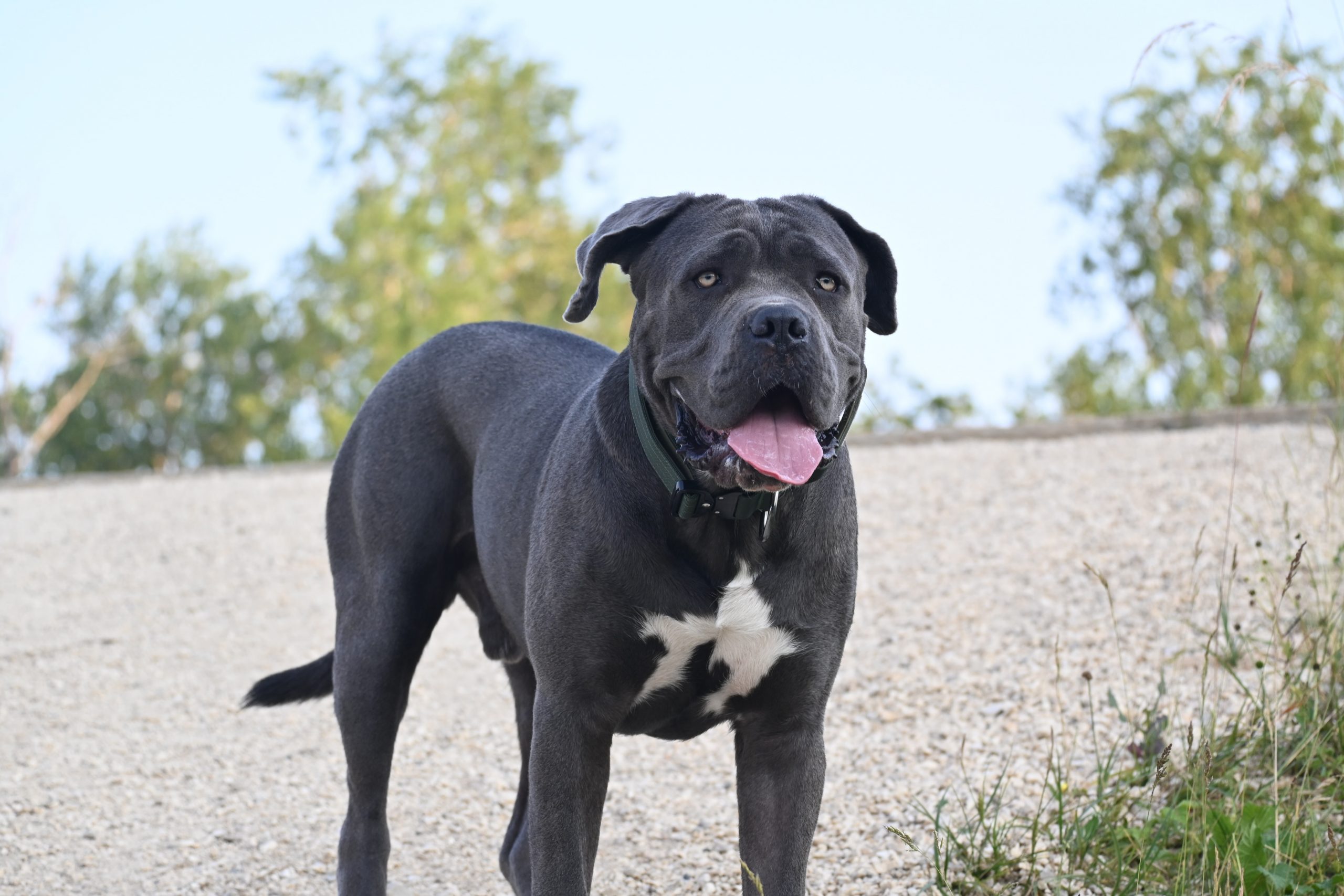
Training a Cane Corso to bark less
The goal is not to silence your Cane Corso completely. The goal is to teach it when barking is useful and when quiet behavior is expected.
Start training early, but remember that adult dogs can learn too. Keep sessions short, calm, and consistent.
Teach a quiet cue
Wait for a natural pause in barking. Say “quiet” in a calm voice, then reward the silence. At first, reward even one or two seconds. Slowly increase the quiet period before giving the treat.
Do not repeat the cue many times while the dog is barking. Otherwise, your Cane Corso may learn that “quiet” is background noise.
Reward calm choices
Pay attention when your dog lies down, watches a trigger without barking, or moves away from the window. Calm behavior often disappears because owners notice only the problem.
A simple reward can include:
• A food treat
• Praise
• A favorite toy
• Permission to move to another room
• A short sniffing walk
Manage the setting
Training works faster when you prevent constant practice of the unwanted behavior. Use curtains, gates, distance, and controlled exposure to reduce triggers.
If your Cane Corso barks at every person passing the window, block the view and practice looking at people from farther away. Gradually reduce the distance as your dog improves.

Exercise and mental stimulation
A Cane Corso needs more than a large yard. Yard time can help, but it does not always provide enough movement or mental work.
Daily activity may include:
• Brisk walks
• Scent games
• Basic obedience practice
• Food puzzles
• Structured play
• Safe training with recall and leash skills
Avoid pushing young Cane Corsos through excessive running or jumping. Large breeds can be vulnerable to joint stress while they grow. Ask your veterinarian about age-appropriate activity, especially if your dog is still developing.
Mental work matters because guardian breeds often enjoy having a task. A short training session can tire the mind more effectively than aimless running. Think of it as giving your dog a job instead of simply trying to exhaust it.
Do Cane Corsos bark a lot when they are under-stimulated? They can. Boredom may turn normal alert behavior into a daily habit. A predictable routine with rest, exercise, training, and social contact often makes a major difference.

Socialization and household habits
Socialization means teaching your dog that different people, animals, sounds, surfaces, and places can be safe. It does not mean forcing your Cane Corso to greet everyone.
Good socialization is slow and positive. Let your dog observe new experiences from a comfortable distance. Reward relaxed body language, such as a soft face, loose tail, and ability to take treats.
Avoid these common mistakes:
• Forcing a fearful dog toward a stranger
• Allowing rough greetings
• Letting children climb on or disturb the dog
• Using harsh corrections around visitors
• Rewarding barking with frantic attention
• Expecting a young dog to behave like a trained adult
Cane Corsos can be affectionate with their families, but they are not usually a carefree breed for every home. Their size, strength, and protective instincts require responsible handling. Early guidance is much easier than fixing a serious reaction later.

When barking may signal a problem
Barking deserves professional attention when it is intense, sudden, or linked with unsafe behavior. Contact your veterinarian or a qualified behavior professional if your dog:
• Starts barking far more than usual
• Barks while pacing, panting, trembling, or hiding
• Barks whenever you leave the home
• Lunges or snaps while barking
• Cannot settle after a trigger disappears
• Shows signs of pain or confusion
• Barks for long periods at night
Separation anxiety is one possible cause. A dog with separation distress may bark, howl, destroy doors, eliminate indoors, or panic when left alone. This issue usually needs a structured plan rather than simple commands.
A veterinary exam is important because behavior can have a medical cause. No online article can diagnose your dog. Age, health history, environment, and video of the behavior all help a professional understand what is happening.

Are Cane Corsos good for quiet homes?
A Cane Corso can live peacefully in a quiet home when its needs are met and its guardian behavior is managed. However, it may not be the best match for every apartment, shared-wall building, or first-time dog owner.
Before bringing one home, consider:
• Can you provide daily training?
• Can you manage a very large and strong dog?
• Do you have a plan for visitors?
• Can you meet exercise and social needs?
• Are barking and guardian behavior allowed where you live?
• Can you afford veterinary care and professional training?
Responsible ownership also includes checking local laws and housing rules. Some landlords and insurance providers have restrictions related to large guardian breeds.
The best environment is not simply a large house. It is a stable home with clear rules, safe management, thoughtful socialization, and an owner willing to stay consistent.
Frequently Asked Questions About Do Cane Corsos Bark a Lot
Do Cane Corsos bark more than other dogs?
Cane Corsos usually bark less than highly vocal breeds, but their protective nature can cause strong alert barking. Their deep bark may sound more intense than the number of barks suggests.
Are Cane Corsos quiet dogs?
Many Cane Corsos are calm and quiet when they feel secure and receive enough exercise. They may become noisy if they are bored, isolated, anxious, or repeatedly exposed to triggers.
Can you train a Cane Corso not to bark?
You can reduce unnecessary barking and teach a reliable quiet cue. You should not expect to remove all barking because alerting is a natural part of the breed’s behavior.
Why does my Cane Corso bark at everyone?
Your dog may be guarding its space, feeling unsure, or lacking early socialization. Use distance, rewards, controlled introductions, and professional help if the behavior includes lunging or threatening body language.
Do Cane Corsos bark when left alone?
Some do, especially if they have separation distress or are not used to being alone. Build alone time gradually and seek veterinary or behavior support if barking occurs with panic, destruction, or escape attempts.
Are Cane Corsos aggressive if they bark?
Barking alone does not prove aggression. Look at the full body language, including stiffness, growling, lunging, raised hackles, retreat, and the dog’s ability to relax after the trigger passes.
Conclusion
So, do Cane Corsos bark a lot? Most do not bark constantly, but they are alert guardian dogs with a loud, serious voice. Barking often increases with boredom, fear, isolation, poor socialization, or unclear household rules.
Focus on the cause, not only the sound. Give your Cane Corso exercise, mental work, calm training, careful socialization, and safe visitor routines. If barking changes suddenly or comes with fear or aggression, involve a veterinarian or qualified behavior professional.
With patience and consistent guidance, your Cane Corso can learn when to alert and when to settle. If you own one, share your experience in the comments and explore more responsible large-breed training resources.

Pet Care Writer & Researcher
Daniel writes practical guides on daily care, feeding, and safety, turning complex topics into simple, actionable advice.