How To Get A Beagle To Stop Barking: Calm Tips
Learn how to get a beagle to stop barking with proven training tips, calming techniques, and easy steps for a quieter, happier home.
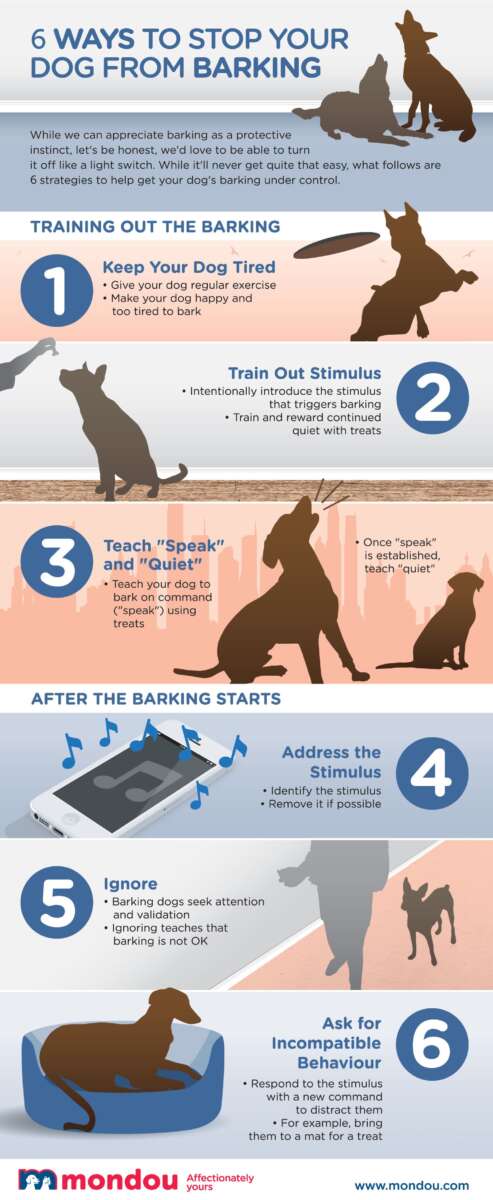
A beagle may bark, howl, or “bay” because it smells something, sees movement, wants attention, feels bored, or feels worried. The best way to reduce barking is to find the cause, prevent needless practice, teach a quiet cue, and reward calm behavior. Avoid yelling or punishment. These methods can increase fear and may make the noise worse.
Beagles are scent hounds bred to work with people while using their strong noses. Vocal behavior is part of their natural history, so the goal is usually less barking and better control, not total silence.
This guide explains how to stop a beagle from barking at home, in the yard, in a crate, at night, or when left alone.

Why Beagles Bark
The first step is to identify the reason for the barking. A beagle that barks at a squirrel needs a different plan from one that cries when left alone.
Common triggers include:
- Alarm barking: Your beagle sees a person, dog, car, or other change.
- Demand barking: The dog barks for food, play, access, or attention.
- Boredom: The dog has too little exercise, sniffing, play, or mental work.
- Fear or stress: The dog feels unsafe around people, dogs, sounds, or places.
- Frustration: The dog cannot reach something it wants.
- Separation distress: The dog vocalizes when you leave or when it cannot follow you.
- Excitement: The dog barks before walks, meals, play, or visits.
- Medical discomfort: Pain, hearing loss, illness, or age-related changes can alter behavior.
Write down what happens before, during, and after each barking episode. This simple record can reveal a pattern.
| What happens before barking? | Likely cause | Helpful first step |
|---|---|---|
| A person walks past the window | Alarm or territorial behavior | Block the view and reward quiet |
| You pick up the leash | Excitement | Teach calm leash preparation |
| You leave the room | Attention seeking or distress | Build calm alone time slowly |
| The beagle is alone for hours | Boredom or separation distress | Add enrichment and assess alone-time behavior |
| The dog barks at night | Outside sounds, fear, discomfort, or habit | Check health, sleep area, and sound triggers |
A video camera can help you see what happens when you are away. Do not assume that every case is “bad behavior.” The American Veterinary Society of Animal Behavior recommends reward-based training and advises against methods that rely on fear, pain, or intimidation.

Meet Your Beagle’s Daily Needs
A tired beagle is not always a quiet beagle, but a beagle with enough safe activity is often easier to train. Physical exercise, scent work, rest, and social contact all matter.
Start with a daily routine that includes:
- A sniffing walk: Let your dog investigate safe smells instead of rushing the whole walk.
- Short training sessions: Practice simple cues for three to five minutes at a time.
- Food-based enrichment: Use part of the daily meal in a puzzle feeder, scatter it in a safe area, or hide small portions for your dog to find.
- Play with clear pauses: Stop while your dog is still able to settle.
- Quiet rest: Provide a calm bed or crate area away from constant noise.
- Regular sleep: Puppies and young dogs may need much more rest than their owners expect.
Do not increase exercise sharply. Build walks and play in small steps, especially if your beagle is overweight, elderly, or has joint problems.
Food puzzles and scent games can help reduce barking caused by boredom. They do not replace training, and they may not solve fear or separation anxiety. If your dog guards food, use enrichment only with guidance from a qualified behavior professional.
Reduce easy triggers at the same time. Close blinds, use a window film, move furniture away from a lookout spot, or bring your beagle inside when neighborhood activity is high. Every barking episode is practice, so prevention supports learning.

Teach a Beagle the “Quiet” Cue
Teach “quiet” with rewards rather than shouting. The cue works best after you have reduced the trigger and created a small pause in the barking.
Step-by-step training
- Prepare small, high-value treats. Use food your dog enjoys. Keep pieces tiny.
- Choose a mild trigger. Do not begin with the loudest or most exciting event.
- Wait for a brief pause. At first, one second of silence is enough.
- Say “quiet” once. Use a calm voice.
- Reward at once. Place the treat near your dog’s nose or deliver it directly.
- Repeat several times.
- Increase the quiet period slowly. Move from one second to two, then three, and so on.
- Add mild distractions. Practice in different rooms before trying the front window or yard.
If your beagle cannot stop long enough to take food, the trigger is too strong. Increase distance, close the curtain, leave the area, or choose an easier practice setting.
You can also teach an alternative behavior, such as:
- Looking at you
- Touching your hand with the nose
- Going to a mat
- Sitting by the door
- Carrying a toy
- Lying down
The alternative behavior gives your dog something useful to do. For example, when a delivery driver arrives, ask your beagle to go to a mat, then reward calm behavior away from the door.
Reward calm before barking starts
Do not wait for noise every time. Notice quiet behavior and reward it. If your beagle watches a passerby without barking, calmly place a treat on the floor. Over time, the dog learns that calm observation pays.
Keep your timing clear. Reward the quiet behavior, not the bark. If the dog barks again, pause and wait for another brief quiet moment.

Stop Demand Barking
Demand barking continues when it works. If barking leads to food, eye contact, play, or an opened door, the dog may repeat it.
To change the pattern, make barking stop producing the desired result. Then reward a polite request.
For example:
- If barking starts during meal preparation, stop moving toward the bowl.
- Wait for quiet or ask for a known cue.
- Place the bowl down only when your beagle is calm.
- Repeat the same rule each time.
Expect barking to increase briefly when the old method stops working. This is called an extinction burst. It can be difficult, but giving in during this stage may teach the dog to bark longer and louder.
Do not ignore every bark automatically. First check for real needs. Your beagle may need to go outside, may be in pain, or may be frightened. The goal is not to withhold care. The goal is to avoid rewarding repeated noise when the dog is safe and needs no urgent help.
Make sure every person in the home follows the same rule. One family member who gives treats during barking can slow progress.
Reduce Barking at Windows, Doors, and in the Yard
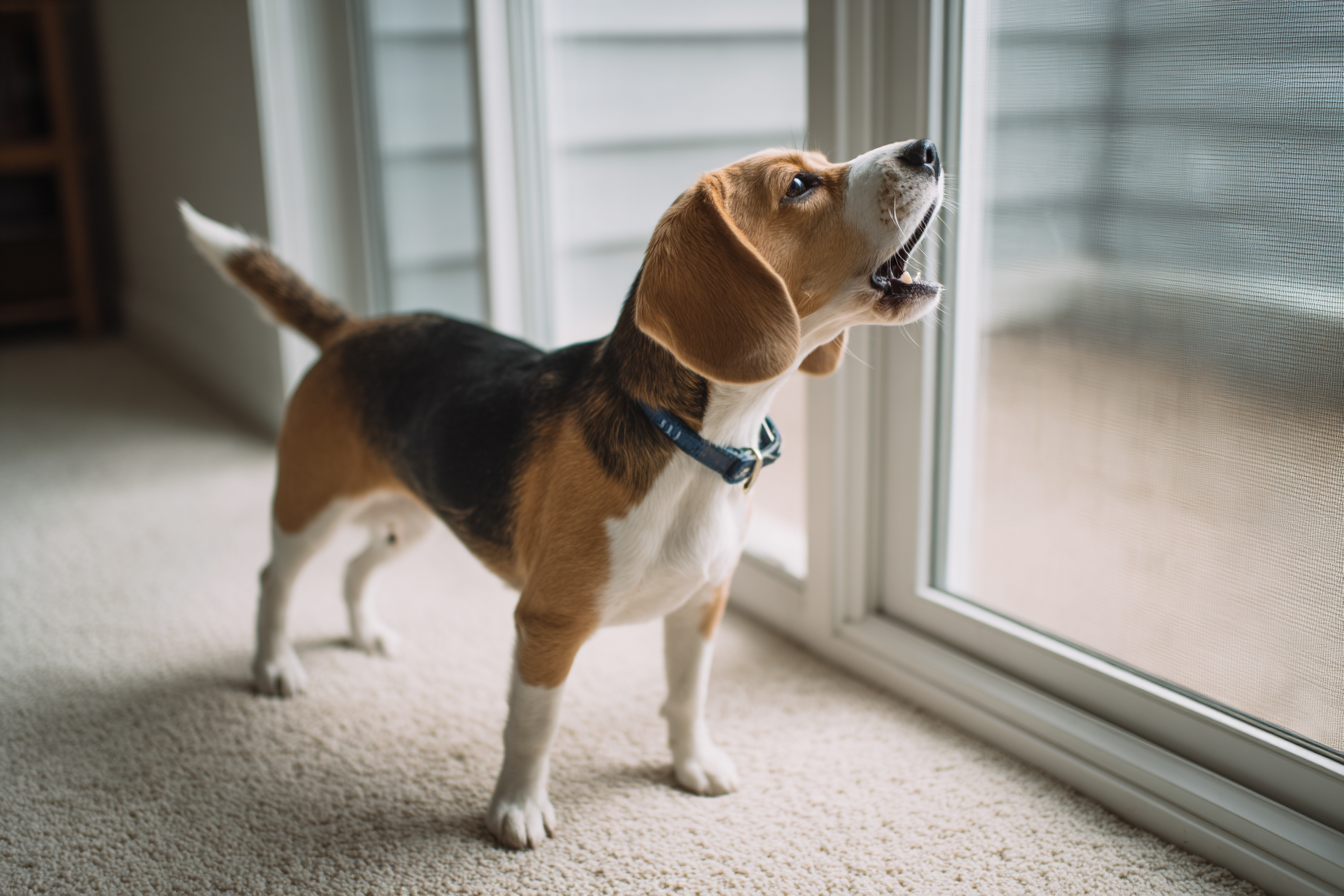
Window and yard barking often grows because the dog repeatedly sees or hears triggers. Management should come before difficult training.
Try these steps:
- Close blinds during busy times.
- Use a gate to keep your beagle away from the front window.
- Play steady background sound to soften outdoor noise.
- Keep your dog indoors when you cannot supervise the yard.
- Teach a “come” cue and reward it with a treat or toy.
- Call your dog away before the barking becomes intense.
- Reward your dog for checking in with you.
- Ask visitors to ignore the dog until it is calm.
Do not leave a beagle outside alone for long periods as a way to “get the barking out.” This can expose the dog to more triggers and may disturb neighbors. Beagles are also skilled at following scents and may escape through weak fencing.
For door barking, practice with a helper. Have the person stand far enough away that your dog can still eat and respond to you. Reward your beagle for looking at the person and then turning back to you. Slowly reduce the distance over many sessions.
If your dog rushes the door, use a leash, gate, or separate room during real arrivals. Management is not a failure. It prevents rehearsal while training continues.

Help a Beagle That Barks When Alone
Barking when alone may be linked to separation anxiety, isolation distress, boredom, or outside triggers. Separation anxiety is more likely when barking comes with pacing, drooling, escape attempts, destruction near exits, vomiting, or house-soiling during absences.
Record your dog during a short absence if it is safe to do so. Look for when the barking begins and whether the dog settles. A dog that barks at a passing truck may need trigger control. A dog that panics within minutes of your departure needs a more careful plan.
For mild cases:
- Give your dog a calm activity before leaving.
- Remove obvious outside triggers.
- Practice very short absences.
- Return before the dog becomes distressed.
- Increase the time in small steps.
- Keep departures and arrivals quiet.
- Repeat only when the dog remains relaxed.
Do not use “cry it out” for a dog showing panic. Repeated panic can make alone-time problems harder to treat. A veterinarian or veterinary behaviorist can assess the problem and discuss behavior treatment. Medication may be appropriate for some dogs, but only a veterinarian can prescribe and monitor it.
A crate is not a cure for separation anxiety. It can help a dog that already views the crate as a safe place, but forcing a panicked dog into a crate may lead to injury.

What Not to Do
Avoid methods that cause pain, fear, or confusion. These include:
- Shouting in the dog’s face
- Hitting, shaking, or pinning the dog
- Spraying water or irritants
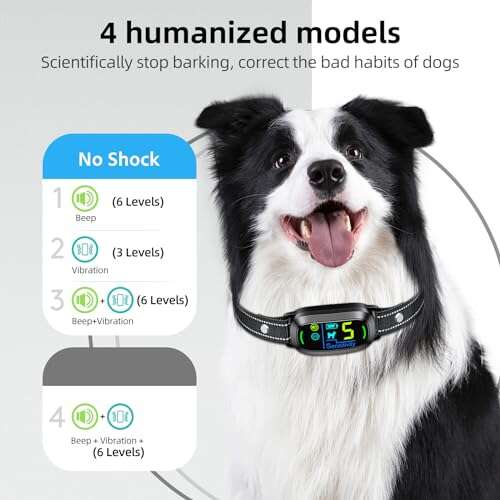
- Using a shock, spray, or vibration bark collar without professional guidance
- Punishing the dog after you return home
- Leaving the dog outside to bark for long periods
- Using an electronic collar to treat separation distress
Punishment may stop a sound for a moment without changing the cause. It can also make a dog afraid of the person, place, or event linked to the correction.
The ASPCA and AVSAB support reward-based training. A certified professional can help you choose a humane plan. Look for a board-certified veterinary behaviorist, a Certified Applied Animal Behaviorist, or a trainer who clearly explains reward-based methods and avoids intimidation.

When to Call a Veterinarian or Behavior Professional
Contact your veterinarian if barking begins suddenly, changes sharply, or appears with other symptoms. Seek help sooner if your beagle shows pain, confusion, hearing changes, aggression, appetite changes, pacing, or sleep disruption.
Professional help is also wise when:
- Your dog panics when alone.
- Barking lasts for long periods each day.
- Your dog tries to escape.
- Your dog bites or may bite.
- You cannot safely control the trigger.
- Training has made no progress after several weeks of steady work.
- Neighbors or housing rules create urgent pressure.
A veterinarian can check for medical causes. A behavior professional can help identify triggers and build a gradual plan. Avoid anyone who promises instant results or says punishment is the only answer.
Keep a simple progress record:
- Trigger
- Distance from trigger
- Barking intensity
- Time needed to settle
- Training used
- Reward given
- Result
Progress may look like fewer barks, faster recovery, or the ability to respond to your cue at a greater distance. These are useful signs even if your beagle still makes some noise.
A Simple Four-Week Training Plan
Use this plan as a starting point. Adjust it to your dog’s stress level.
Week 1: Find and manage triggers
Record barking episodes. Block window views, reduce yard access, and improve daily sniffing and enrichment. Reward quiet behavior whenever you notice it.
Week 2: Build basic responses
Practice name recognition, hand targeting, “come,” “go to mat,” and short calm stays. Work in a quiet room before adding distractions.
Week 3: Add mild triggers
Use a helper, recording, or controlled distance. Reward your beagle for noticing the trigger and turning back to you. End the session before barking becomes intense.
Week 4: Practice real-life events
Train during low-traffic times, calm visitor arrivals, and short departures. Keep using management when you cannot supervise.
If your dog gets worse, reduce the difficulty. Training should challenge your beagle without causing panic. Short, successful sessions are more useful than one long session that ends in frantic barking.

Frequently Asked Questions
Can you completely stop a beagle from barking?
Usually, no. Beagles are naturally vocal scent hounds. You can often reduce unnecessary barking, teach a quiet cue, and improve your dog’s response to common triggers.
Why does my beagle bark at nothing?
Your beagle may hear or smell something you cannot detect. Other possibilities include anxiety, boredom, pain, aging, or a learned habit. Check the environment and speak with a veterinarian if the behavior is new or unusual.
How long does it take to stop a beagle from barking?
Many owners see early changes within a few weeks of consistent management and reward-based training. The timeline depends on the cause, the dog’s age, the strength of the habit, and how often the trigger occurs.
Should I use a bark collar on my beagle?
Do not make a bark collar your first choice. It may suppress noise without treating fear, frustration, boredom, or separation distress. Ask a veterinarian or qualified behavior professional for guidance, especially if the barking is anxiety-related.
Why does my beagle bark at night?
Night barking may come from outdoor sounds, wildlife, loneliness, discomfort, fear, or a change in hearing or vision. Check the sleeping area, reduce outside noise, provide a calm routine, and arrange a veterinary check if the behavior is new.
Conclusion
To get a beagle to bark less, first identify the trigger. Then prevent needless barking, meet the dog’s exercise and scent needs, teach a quiet or alternative cue, and reward calm behavior. Use the same rules every day, and increase training difficulty slowly.
If barking involves panic, aggression, sudden behavior change, or possible illness, involve a veterinarian or qualified behavior professional. A calm, consistent plan will usually do more than louder commands ever can.

Pet Care Writer & Researcher
Daniel writes practical guides on daily care, feeding, and safety, turning complex topics into simple, actionable advice.