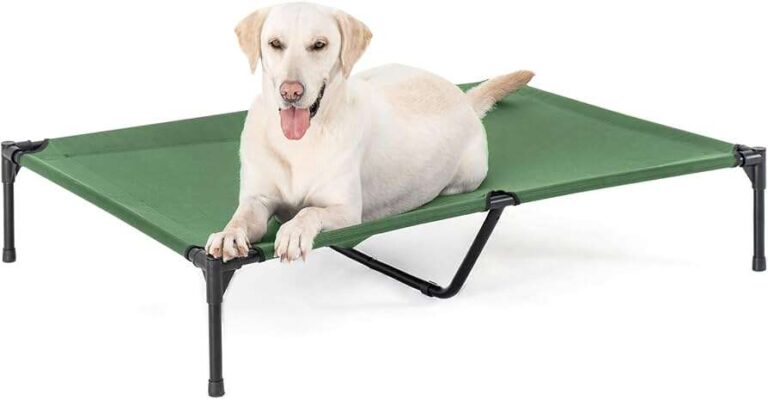
What Is The Best Filling For A Dog Bed: Best Options
What is the best filling for a dog bed? Compare memory foam, cotton, cedar, and more to find a comfortable, supportive choice for your pet.
For dog owners in the United States, shredded memory foam or a solid memory-foam core is usually the best filling for a dog bed when support, pressure relief, and durability matter most. It works especially well for large dogs, senior dogs, and dogs with stiff joints.
The best choice still depends on your dog. A healthy puppy may do well with low-cost polyester fiberfill. A hot sleeper may prefer shredded foam with good airflow. A dog that chews or eats bedding needs a safer, simpler design with no loose filling.

Quick answer: Which dog bed filling is best?
Memory foam is the best all-around filling for support. It spreads a dog’s weight across the bed and can reduce pressure on the hips, shoulders, and elbows. A solid foam slab usually gives more even support than loose fill.
Here is a simple comparison:
| Filling | Best for | Main benefit | Main drawback |
|---|---|---|---|
| Memory foam | Senior, large, or stiff dogs | Strong support and pressure relief | Can hold heat and cost more |
| Shredded foam | Dogs that like to nest | Support with a softer feel | Can shift and need fluffing |
| Polyester fiberfill | Puppies and light-use beds | Soft and affordable | Flattens over time |
| Polyurethane foam | Basic support | Firm and widely available | Quality varies |
| Cotton or wool | Dogs that prefer natural fibers | Soft and breathable | May compress or hold moisture |
| Cedar chips | Odor control | Natural scent | Can irritate skin, eyes, or airways |
| Buckwheat hulls | Firm, moldable support | Airflow and shape control | Noisy and less common |
The word “best” matters here. The best filling for a healthy small dog may not be the best filling for a 100-pound senior dog with arthritis.
What makes a dog bed filling good?
A good filling should support your dog’s body without becoming a hard, flat surface. It should also fit your dog’s habits, health needs, and living space.
Look for these traits:
- Support: The bed should not let your dog sink to the floor.
- Pressure relief: The filling should spread weight over a broad area.
- Shape retention: It should recover after use.
- Low odor: Strong chemical or musty smells are a warning sign.
- Easy cleaning: The cover should come off and go in the washer when possible.
- Safe construction: The filling should stay inside a strong, closed liner.
- Good temperature control: The bed should not make your dog too hot.
- Proper firmness: It should feel stable but not hard.
Your dog’s body should stay level while resting. If the hips sink far below the shoulders, the bed may be too soft or too thin. If your dog avoids the bed, moves off it often, or cannot settle, the filling may be too firm, too warm, or uncomfortable.
How thick should the filling be?
Thickness depends on your dog’s weight and the floor beneath the bed. A thin bed may work on carpet for a small dog. A large dog on hardwood usually needs more depth and stronger support.
As a practical starting point:
- Small dogs under about 20 pounds: 2 to 3 inches of supportive foam may work.
- Medium dogs around 20 to 60 pounds: 3 to 4 inches is often more useful.
- Large dogs over about 60 pounds: 4 inches or more may provide better support.
These are starting points, not medical rules. Foam density matters as much as thickness. A thick, low-density foam can flatten faster than a thinner, higher-quality foam.

Memory foam: the best choice for most dogs needing support
Memory foam is usually the strongest choice for dogs that need pressure relief. It is a type of polyurethane foam that softens under body heat and weight. This lets the foam spread pressure instead of placing it on one small area.
A solid memory-foam slab gives the most even support. It is a good option for:
- Senior dogs
- Large and giant breeds
- Dogs with stiff joints
- Dogs recovering from certain injuries
- Dogs that sleep stretched out
- Dogs that struggle to rise from a flat floor
Memory foam does not treat arthritis or replace veterinary care. It may make rest more comfortable, but pain, limping, stiffness, or trouble standing should be discussed with a veterinarian. The American Animal Hospital Association advises owners to seek veterinary help for signs of pain rather than assuming discomfort is part of aging.
Memory foam limitations
Memory foam can retain heat. This may bother dogs with thick coats, dogs that sleep in warm rooms, or dogs that already pant at rest. A cooling cover may help, but marketing terms such as “cooling” do not guarantee a lower sleeping temperature.
Memory foam also varies widely. Check the product details for:
- Foam type
- Foam density, if listed
- Total thickness
- A washable cover
- A separate inner liner
- Low-odor materials
- A safe return policy
A certification can provide useful information, but it is not proof that a bed is perfect for every dog. For example, CertiPUR-US evaluates certain flexible polyurethane foam properties, such as emissions and specified chemical content. It does not independently prove that a complete dog bed will last for years or prevent joint pain.

Shredded foam: best for dogs that like to nest
Shredded memory foam gives a dog a softer, more flexible sleeping surface. The pieces move as the dog circles, digs, and settles. This can suit dogs that like to make a nest before lying down.
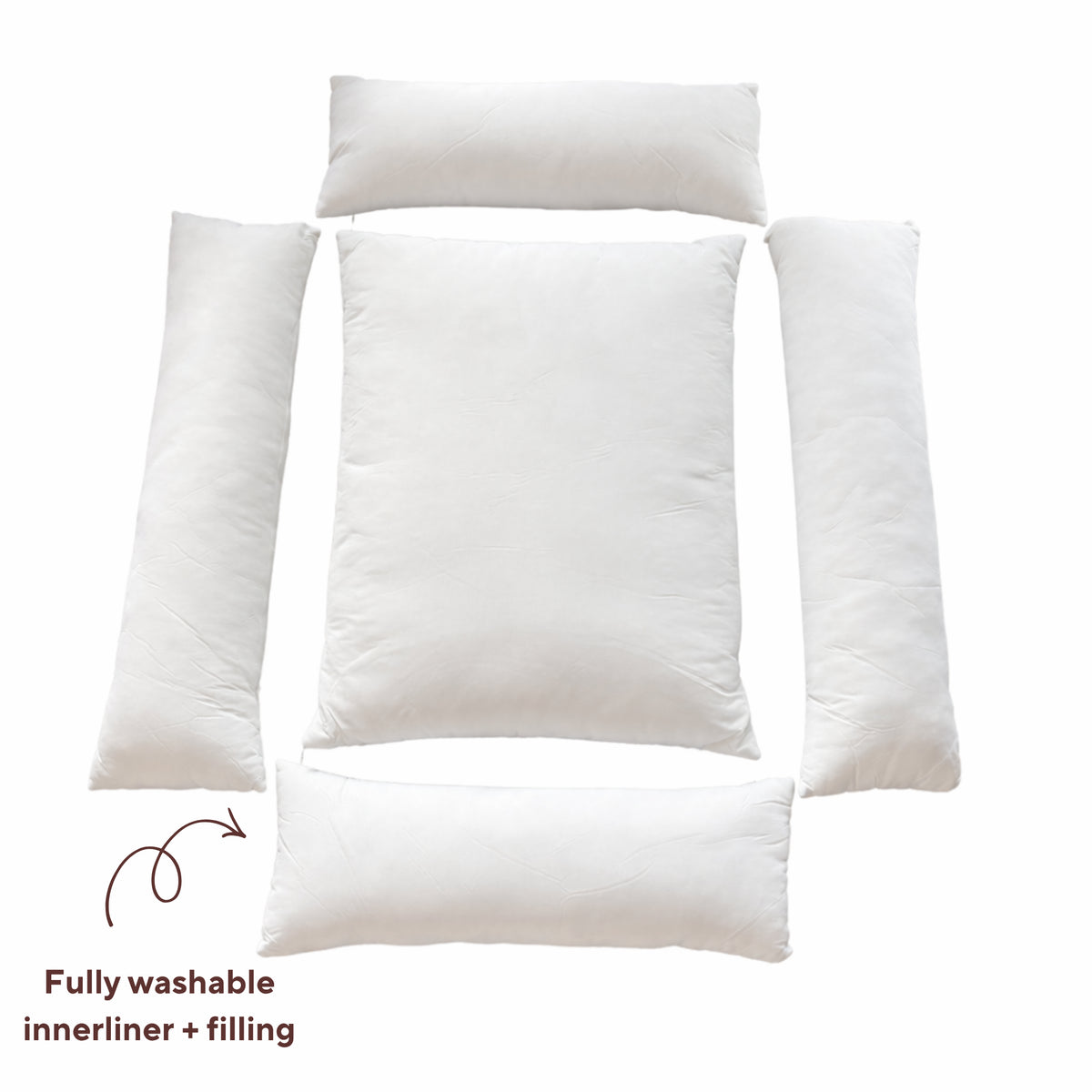
Shredded foam may also improve airflow compared with one solid block, depending on the cover and how tightly the pieces are packed. It can be a useful middle ground between a firm orthopedic bed and a soft pillow bed.
The trade-off is movement. Shredded foam can gather in one area and leave another area thin. Look for an inner liner with compartments or a design that keeps the pieces spread out. You may also need to shake or redistribute the filling from time to time.
Avoid loose foam that escapes through a torn cover. Foam pieces can create a choking or swallowing risk. If your dog chews bedding, a solid, tightly enclosed insert is safer than a bed filled with loose pieces.
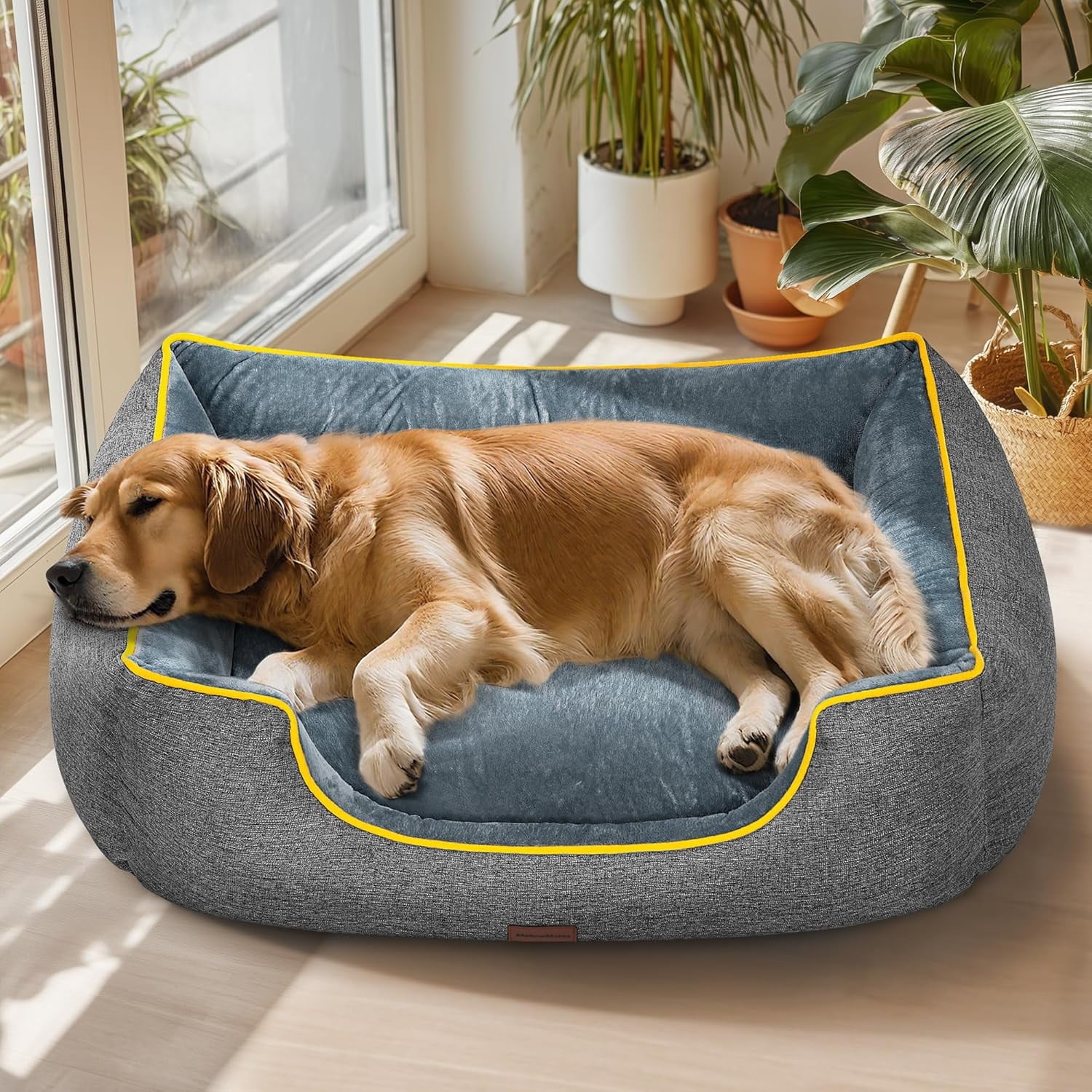
Polyester fiberfill: soft, affordable, and best for light use
Polyester fiberfill is the fluffy material used in many pillow-style dog beds. It is light, soft, and often less expensive than foam.
It may work well for:
- Puppies
- Small dogs
- Dogs that prefer a soft cushion
- Short-term use
- Crate liners
- Beds that need frequent replacement
Its main weakness is compression. Heavy dogs can flatten fiberfill quickly. Once the filling forms a permanent dip, it may no longer support the dog evenly.
Fiberfill can also become lumpy after washing. A removable, machine-washable cover helps, but the inner cushion may still need regular reshaping. For a large or senior dog, fiberfill is usually better as a top layer over firm foam than as the only filling.

Other dog bed fillings: when they make sense
Polyurethane foam
Basic polyurethane foam can provide firm support at a lower price than memory foam. It comes in many densities and quality levels. Some foam feels springy, while other foam becomes flat or crumbly with use.
This filling may suit a crate pad or a basic bed for a healthy adult dog. Ask for the foam density when possible. A seller that gives only vague claims such as “premium foam” provides little useful information.
Cotton and wool
Cotton and wool feel natural and can offer good softness. Wool may help manage moisture, while cotton can feel cool and familiar.
Both materials can compress. They may also absorb moisture from wet paws, accidents, or drool. They need full drying after washing to reduce odor and mold risk. These fillings are not always the best choice for dogs that have accidents or beds placed in damp areas.
Cedar chips
Cedar chips are used in some outdoor or odor-control beds. They can produce a strong scent and may discourage some insects.
They are not a strong default choice for indoor sleeping. Dust and aromatic oils may irritate a sensitive dog’s skin or airways. Do not use cedar chips if your dog has respiratory problems, skin reactions, or a habit of chewing and eating bedding.
Buckwheat hulls
Buckwheat hulls move around the body and allow air to pass through the bed. Some dogs like the firm, moldable feel.
They can make a rustling sound, and the hulls must stay inside a durable liner. They are also less common, so replacement filling and repair may be harder to find.

Choose the filling by your dog’s needs
Start with your dog, not the material label. The right filling depends on weight, age, sleep style, health, and behavior.
| Your dog’s needs | Better starting choice | Why |
|---|---|---|
| Senior or stiff dog | Solid memory foam | Gives steady support and limits deep sinking |
| Large or heavy dog | Dense foam with a thick base | Resists flattening better than loose fiber |
| Puppy that chews | Durable, simple foam bed with a closed liner | Fewer loose pieces to reach |
| Small dog that curls up | Fiberfill or shredded foam | Soft and easy to shape |
| Dog that gets hot | Breathable shredded foam or a thin foam mat | May allow better airflow |
| Dog that nests | Shredded foam | Moves with digging and circling |
| Dog with accidents | Waterproof liner and washable cover | Helps protect the filling |
| Outdoor dog | Closed-cell foam or a removable, quick-dry pad | Absorbs less water |
| Dog with allergies | Washable cover and low-dust filling | Makes cleaning easier |
For dogs with arthritis or joint pain
Choose support first. A firm, thick foam base usually makes more sense than a thin pillow. The bed should be easy to step onto, with a low entry edge if your dog has trouble lifting its legs.
Watch how your dog uses the bed. Signs that it may not be comfortable include repeated repositioning, reluctance to lie down, panting in a cool room, stiffness after resting, or avoiding the bed altogether.
A bed cannot diagnose or manage joint disease. Ask your veterinarian about pain, weight, exercise, and other treatments if your dog shows ongoing discomfort.
For dogs that chew or swallow bedding
Safety comes before softness. Inspect the bed often for holes, loose threads, foam pieces, and exposed stuffing. Replace it when the filling becomes accessible.
Do not rely on a product label that says “indestructible.” No fabric or filling is truly safe for every determined chewer. If your dog eats fabric, foam, or fiber, contact a veterinarian or an animal poison service promptly, especially if vomiting, weakness, belly pain, or trouble passing stool develops.
How to test a dog bed before keeping it
Use a short home check rather than judging the bed by appearance alone.
- Place the bed on the surface where your dog sleeps. A bed may feel different on tile than on carpet.
- Watch your dog lie down and rise. Your dog should settle without struggling or sinking to the floor.
- Check the depth after use. Press the center and compare it with the edges.
- Look for permanent dips. A dip that does not recover suggests weak or insufficient filling.
- Check body position. The spine should look level, not sharply curved by a deep hole.
- Check temperature. Feel the surface after your dog has rested. Excess heat may mean the bed needs better airflow.
- Inspect the cover and liner. Look for gaps, broken zippers, and exposed filling.
- Wash the cover according to its instructions. See whether it keeps its shape and closes securely afterward.
A useful test is whether your dog chooses the bed without being placed on it. Preference alone does not prove support, but consistent avoidance is valuable feedback.
When to replace the filling or bed
Replace the filling when it is flat, lumpy, wet, moldy, torn, or difficult to clean. Replace the whole bed when the inner liner is damaged or the filling can escape.
Do not add new foam to an old bed without checking the cover size and zipper strength. An overstuffed cover can split, and a tight cover may compress the new filling so much that it provides little support.

Common mistakes when choosing dog bed filling
Choosing softness over support
A very soft bed may feel pleasant by hand but fail under a heavy dog. Support matters more than a fluffy first impression.
Buying by thickness alone
A 6-inch bed is not automatically better than a 3-inch bed. Foam density, construction, and the dog’s weight change the result.
Ignoring the cover
The best filling becomes a poor choice if the cover cannot be washed. Look for a removable cover, strong seams, and a water-resistant inner liner.
Using human bedding as a long-term substitute
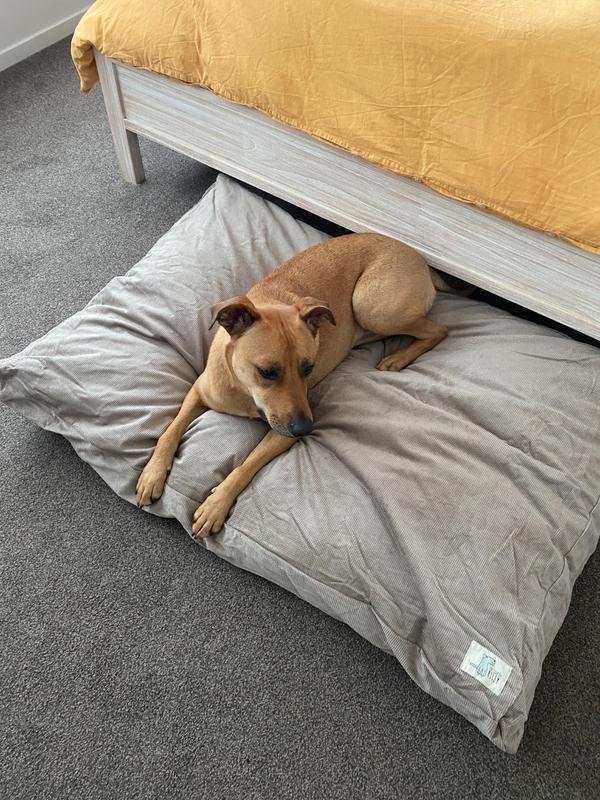
Pillows and comforters can work for temporary use, but they may flatten, trap heat, or allow a dog to burrow into an unsafe position. They also tend to hold moisture.
Failing to account for heat
Memory foam may be comfortable but warm. Use a breathable cover, keep the bed away from direct heat, and provide a cooler resting option.
Assuming natural means risk-free
Cedar, wool, cotton, and plant-based materials can still cause irritation, absorb moisture, or become dangerous if eaten. “Natural” describes the source, not the full safety profile.
Frequently asked questions
Is memory foam or fiberfill better for a dog bed?
Memory foam is better for support and pressure relief, especially for large or older dogs. Fiberfill is softer and cheaper, but it tends to flatten sooner. For many dogs, a foam base with a thin fiberfill top layer offers a useful balance.
What is the best filling for an older dog?
A thick, supportive memory-foam base is usually the best starting point. Choose a low-entry design with a washable cover. If the dog has pain, limping, or trouble standing, consult a veterinarian rather than relying on a bed alone.
Is shredded memory foam safe for dogs?
It can be safe when the foam is enclosed in a strong inner liner and the outer cover has no gaps. It is not a good choice for a dog that tears open beds and swallows foam. Inspect it often.
Can dogs sleep on polyester fiberfill?
Yes, many dogs can use polyester fiberfill safely when the material stays inside an intact cover. The main concern is not normal contact. It is chewing, swallowing, flattening, overheating, and poor support for heavier dogs.
How often should dog bed filling be replaced?
There is no fixed schedule. Check the bed every few weeks for flat areas, lumps, moisture, odor, tears, and exposed material. Replace it when it no longer supports your dog or cannot be cleaned well.
What filling is best for a dog that gets hot?
Choose a breathable design with good airflow, such as a thinner foam bed or a well-constructed shredded-foam bed. Avoid placing the bed near a heater or in direct sun. Always give your dog access to a cooler surface.
Final recommendation
For most dogs, choose a thick memory-foam bed with a washable cover and a separate protective liner. Pick solid foam for steady support. Pick shredded foam for dogs that like to nest or need a softer feel.
Use polyester fiberfill for small dogs, puppies, or short-term beds. Avoid loose filling if your dog chews or swallows bedding. Above all, match the bed to your dog’s weight, sleeping style, temperature needs, and health.
The next step is simple: watch your dog lie down, rise, and settle on the bed. If the body stays supported, the dog remains comfortable, and the filling stays contained and clean, you have likely found a good fit.

Pet Care Writer & Researcher
Daniel writes practical guides on daily care, feeding, and safety, turning complex topics into simple, actionable advice.