What Is The Best Non Kibble Dog Food: Healthy Picks
What is the best non kibble dog food? Compare fresh, raw, homemade, and wet options to find a nutritious choice your dog will love.
The best non kibble dog food is complete and balanced wet, fresh-cooked, or homemade food planned with a veterinary nutritionist.
Choosing the best non kibble dog food is not only about avoiding dry pellets. It means finding food that gives your dog the right balance of protein, fat, vitamins, minerals, calories, and water. After comparing wet food, fresh food, raw diets, and homemade meals, one rule stands out: nutrition comes before marketing claims.
What is the best non kibble dog food?
For most dogs, the best non kibble dog food is a commercially prepared wet or fresh food labeled “complete and balanced” for the dog’s life stage. These foods are easier to feed safely than homemade or raw diets because they are formulated to meet recognized nutrient standards.
A good non-kibble diet should provide:
• High-quality animal protein, such as chicken, beef, turkey, fish, or lamb
• Healthy fats for skin, coat, and energy
• Digestible carbohydrates or fiber, when suitable for the dog
• Essential vitamins and minerals
• Enough calories for the dog’s age, size, activity, and health
• Safe preparation and storage
No single food is best for every dog. A senior Labrador with kidney disease needs a very different diet from a healthy young Chihuahua. Your dog’s stool, weight, energy, allergies, medical history, and taste preferences all matter.
The label should state that the food is complete and balanced for a specific life stage. In the United States, this statement is usually linked to nutritional standards established by the Association of American Feed Control Officials. This is one of the most useful checks when comparing non-kibble dog food.
Best types of non-kibble dog food
There are several ways to feed a dog without dry kibble. Each choice has benefits and limits. The best option is the one that meets your dog’s nutritional needs and fits your daily routine.
Wet or canned dog food
Wet food is often the simplest alternative to kibble. It usually contains much more water, which can help dogs that do not drink enough on their own.
Benefits include:
• High moisture content
• Strong smell and taste
• Soft texture for puppies, seniors, and dogs with dental pain
• Easy portion control
• Wide variety of protein options
The main drawback is cost. Wet food also spoils faster after opening and may need refrigeration. Some cans contain fewer calories per ounce than dry food, so your dog may need a larger serving.
Look for a complete and balanced formula rather than a food designed only for supplemental or intermittent feeding. Wet food labeled as a topper may not contain every nutrient your dog needs.
Fresh cooked dog food
Fresh cooked food is gently heated and often sold chilled or frozen. It may include meat, vegetables, grains, oils, and added vitamins and minerals.
Many owners like fresh food because the ingredients are easy to recognize. Dogs may also enjoy the smell and soft texture. However, fresh food is not automatically healthier just because it looks more like home cooking.
The best fresh dog food should:
• Be complete and balanced
• List feeding amounts by weight and life stage
• Use safe cooking and storage practices
• Provide clear company contact information
• Explain how the recipe was formulated
Fresh food can be a strong choice for owners who want the best non kibble dog food without preparing every meal themselves. Still, compare calorie levels carefully. Two fresh foods can look similar but provide very different amounts of energy.
Homemade cooked food
A homemade diet can work well when it is carefully designed. It may help dogs with certain allergies or medical needs, but it is also easy to make unbalanced.
Common homemade diet mistakes include:
• Feeding too much meat and not enough calcium
• Leaving out essential vitamins and trace minerals
• Using too much liver
• Offering unsafe foods such as onions, garlic, grapes, raisins, or xylitol
• Guessing portion sizes
• Changing ingredients without adjusting the nutrient mix
A recipe from a general pet website may not be suitable as a lifelong diet. For the best non kibble dog food made at home, ask a board-certified veterinary nutritionist to create or review the recipe.
Raw dog food
Raw diets include uncooked meat, bones, organs, and sometimes fruits or vegetables. Some owners report improved appetite or smaller stools, but strong evidence does not show that raw food is safer or more nutritious than a properly prepared cooked diet.
Raw food carries risks such as:
• Salmonella, E. coli, and other harmful bacteria
• Broken teeth or intestinal blockage from bones
• Nutrient deficiencies
• Excess vitamin A or calcium
• Illness in people with weak immune systems
• Contamination of kitchen surfaces
Puppies, older dogs, pregnant people, young children, and immunocompromised family members may face greater risk from foodborne bacteria. If you choose raw food, discuss it with your veterinarian and use strict food safety practices.
Dehydrated or freeze-dried food
Dehydrated and freeze-dried foods remove much of the water from the ingredients. They are light, convenient, and often easy to store.
Some are complete meals. Others are treats, mixers, or meal toppers only. Read the label closely and add water when the package recommends rehydration.
Freeze-dried raw food still carries raw-food concerns unless it has been treated to reduce harmful bacteria. The word “freeze-dried” does not automatically mean “safe” or “complete.”
How to choose the best non kibble dog food
Start with your dog, not the package. Marketing terms such as natural, human-grade, premium, and holistic can sound appealing, but they do not replace a complete nutritional profile.
Use this step-by-step process.
1. Check the nutritional statement
Choose a food that says it is complete and balanced for your dog’s life stage. Puppies need growth nutrition. Adult dogs need maintenance nutrition. Pregnant or nursing dogs may need a diet formulated for reproduction or all life stages.
Avoid using a food labeled only for intermittent or supplemental feeding as your dog’s main meal.
2. Match the food to your dog’s health
A healthy adult dog may do well on many quality diets. A dog with diabetes, kidney disease, pancreatitis, food allergies, or urinary problems may need a veterinary therapeutic diet.
Ask your veterinarian before changing food if your dog has:
• Ongoing vomiting or diarrhea
• Unexplained weight loss
• Kidney, liver, or heart disease
• Repeated urinary problems
• Pancreatitis
• Severe skin or ear infections
• Suspected food allergies
The best non kibble dog food for a healthy dog may be unsuitable for a dog with a medical condition.
3. Compare calories, not just cups
Wet and fresh foods contain more water than kibble. This means a dog may need more volume to receive the same calories.
Use the calorie statement on the package. It is usually listed as kilocalories per can, pouch, cup, or kilogram. Measure meals with a kitchen scale when possible, especially for small dogs.
Watch your dog’s body condition. You should be able to feel the ribs under a thin layer of fat, but the ribs should not be sharply visible in most healthy dogs.
4. Review the ingredient list wisely
Ingredients are listed by weight before cooking. Meat may appear near the top because it contains water, while dry ingredients become more concentrated after processing.
Do not judge food by one ingredient alone. A long ingredient list is not always better, and a short list is not always complete. The nutritional statement, calorie content, safety record, and suitability for your dog matter more.
5. Consider the company’s quality controls
A trustworthy pet food company should be willing to explain:
• Where it makes the food
• Who formulates its recipes
• How it tests ingredients
• Whether it tests finished products
• How it handles recalls
• How you can contact the company
Clear answers do not guarantee perfection, but vague answers should make you cautious.
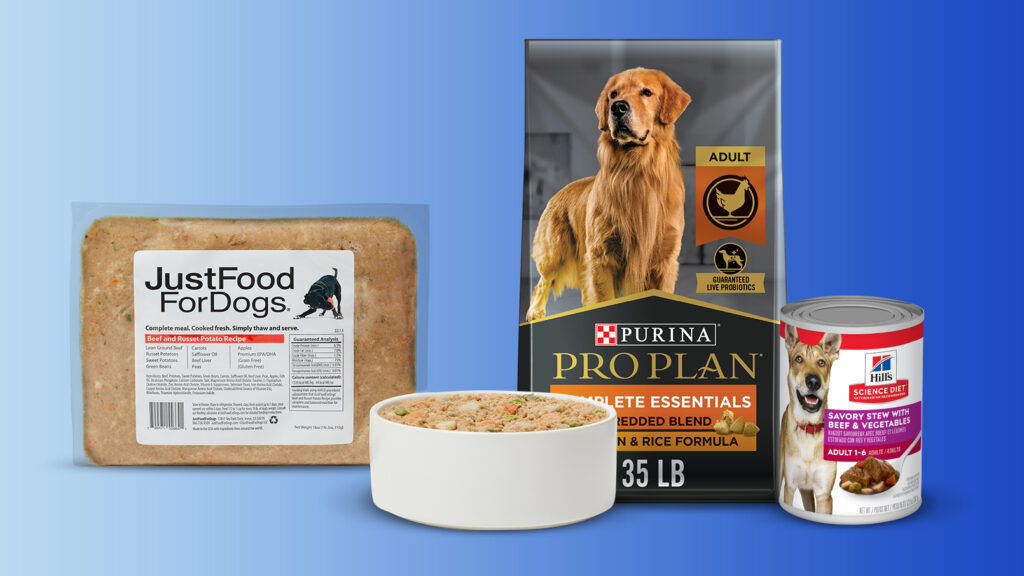
Non-kibble dog food comparison
| Food type | Main benefits | Main limits | Best fit |
|---|---|---|---|
| Wet food | High moisture, tasty, soft texture | More expensive, spoils after opening | Most adult dogs, picky eaters, seniors |
| Fresh cooked food | Appealing texture, easy-to-see ingredients | Cost, storage, quality varies | Owners wanting prepared fresh meals |
| Homemade cooked food | Customizable, useful for some allergies | Easy to make nutritionally incomplete | Recipes guided by a veterinary nutritionist |
| Raw food | High palatability for some dogs | Bacteria, bone, and balance risks | Only with careful veterinary guidance |
| Freeze-dried food | Convenient, lightweight, long shelf life | Expensive, may still be raw | Travel and occasional feeding if complete |
| Commercial gently cooked food | Convenient and soft | Refrigeration and cost | Dogs and owners needing a fresh option |
For many households, complete wet food offers the best balance of safety, nutrition, moisture, and convenience. For others, a complete fresh-cooked diet may be worth the extra cost.
Benefits of feeding a non-kibble diet
The best non kibble dog food can offer practical benefits, although results vary from dog to dog.
More moisture
Wet and fresh foods can support water intake. This may be helpful for dogs that rarely visit the water bowl, although food alone cannot treat urinary or kidney disease.
Better appetite
Some dogs prefer the smell and texture of moist food. This can help older dogs, dogs recovering from illness, and dogs with reduced appetite.
A sudden appetite change should not be blamed on food preference alone. It can signal dental pain, stomach disease, infection, or another health problem.
Softer texture
Soft food may be easier for dogs with missing teeth, sore gums, or jaw problems. It is not a substitute for dental care, though. Many wet foods do not provide the same mechanical cleaning effect as some dental diets.
Easier food mixing
Wet or fresh food can make it easier to mix medication, supplements, or water into a meal. Ask your veterinarian before crushing pills, because some medications should not be mixed with food.
More variety
Rotating between suitable proteins and textures may help some dogs remain interested in meals. Make changes slowly, and avoid constant switching if your dog has a sensitive stomach.

Drawbacks of non-kibble dog food
Non-kibble feeding is not perfect for every home. Understanding the limits helps you make a safer choice.
• It often costs more than dry food.
• Portions may be larger because of high water content.
• Opened wet and fresh food needs refrigeration.
• Food can spoil if left out too long.
• Homemade meals can lack key nutrients.
• Raw diets can spread harmful bacteria.
• Soft food may not help reduce plaque buildup.
• Some dogs gain weight when owners add toppers without reducing the main meal.
Do not assume that a grain-free, raw, or fresh diet is automatically superior. Diet quality depends on nutrient balance, safe production, calorie control, and the dog’s individual health.
How to switch from kibble to non-kibble food
A slow transition can reduce gas, loose stools, and vomiting. Most dogs do well with a change over seven to ten days.
-
Feed about 75% of the old food and 25% of the new food for two to three days.
-
Move to a 50/50 mix for another two to three days.
-
Feed 25% of the old food and 75% of the new food for two to three days.
-
Serve the new food alone if your dog remains comfortable.
Some dogs need two weeks or longer. If your dog develops repeated vomiting, severe diarrhea, blood in the stool, weakness, or refuses food, stop the transition and contact your veterinarian.
Use clean bowls for every meal. Wash wet-food dishes with hot, soapy water. Refrigerate opened food promptly, and follow the package storage directions.
Feeding mistakes to avoid
Even the best non kibble dog food can cause problems when fed incorrectly.
Giving too many toppers
Toppers, treats, eggs, meat, and table scraps can quickly add calories. As a general rule, treats and extras should stay near 10% or less of daily calories unless your veterinarian advises otherwise.
Guessing portions
A scoop or spoon is not always accurate. Weigh food when possible, and adjust portions based on body condition and weight changes.
Changing food too often
Frequent changes may cause digestive upset and make it difficult to identify an allergy or intolerance. Choose a suitable food and give your dog time to adjust.
Ignoring dental health
A soft diet may improve comfort but can leave plaque on the teeth. Brush your dog’s teeth with pet-safe toothpaste and schedule veterinary dental checks.
Trusting online reviews alone
Reviews can tell you whether dogs enjoy a food, but they cannot confirm nutritional adequacy. Use reviews as one clue, not as proof.
In my experience reviewing feeding plans, the most common mistake is focusing on attractive ingredients while overlooking calories and nutrient completeness. A plain-looking canned food that is complete and balanced is often a safer choice than a fashionable diet with no clear nutritional statement.
When to ask a veterinarian
A veterinarian can help you select the best non kibble dog food when your dog has special needs. This is especially important when food is being used to manage disease.
Seek professional advice if your dog:
• Is under six months old
• Is pregnant or nursing
• Has a chronic illness
• Has lost or gained weight quickly
• Has repeated digestive problems
• Has suspected food allergies
• Needs a homemade diet
• Is switching to a raw diet
For homemade feeding, look for a board-certified veterinary nutritionist. A regular wellness visit can also help your veterinarian assess body condition, dental health, stool quality, and calorie needs.

Frequently Asked Questions About the Best Non Kibble Dog Food
What is the healthiest alternative to kibble for dogs?
A complete and balanced wet or fresh-cooked food is usually the healthiest practical alternative for most dogs. The right choice depends on your dog’s age, health, calorie needs, and tolerance.
Is wet dog food better than kibble?
Wet food is not automatically better, but it provides more moisture and may be easier for picky dogs, seniors, and dogs with dental pain to eat. Kibble can be more affordable and convenient, so the best choice is the complete diet your dog handles well.
Can dogs eat homemade food instead of kibble?
Dogs can eat homemade food, but long-term recipes must include the right amounts of protein, fat, calcium, vitamins, and minerals. Use a recipe created or checked by a veterinary nutritionist rather than guessing from human meal plans.
Is raw dog food safer than cooked dog food?
Raw food is not proven to be safer than properly prepared cooked food. It can expose dogs and people to harmful bacteria and may cause nutritional or bone-related problems if it is not carefully formulated.
How much non-kibble food should I feed my dog?
Follow the calorie and feeding guidance on the package, then adjust it based on your dog’s weight and body condition. Since foods vary widely in calories, compare kilocalories rather than feeding by volume alone.
Can I mix wet food with kibble?
Yes, most healthy dogs can eat a mix of wet food and kibble. Reduce the amount of kibble so the combined meal does not provide too many calories.
How long can wet dog food sit out?
Wet food should not sit at room temperature for long, especially in warm conditions. Refrigerate leftovers promptly and follow the product’s storage directions to reduce spoilage and bacterial growth.
Conclusion
The best non kibble dog food is usually a complete and balanced wet or fresh-cooked diet from a company with clear quality standards. Homemade and raw diets can be used in some cases, but they require more planning and carry greater risks.
Check the nutritional statement, compare calories, match the food to your dog’s health, and change diets slowly. A thoughtful choice can improve mealtime without sacrificing safety. Talk with your veterinarian, track your dog’s weight and stool, and share your feeding experience or questions in the comments.

Pet Care Writer & Researcher
Daniel writes practical guides on daily care, feeding, and safety, turning complex topics into simple, actionable advice.