Why Do Big Dogs Like Small Beds: The Cozy Truth
Why do big dogs like small beds? Learn the cozy, instinctive reasons and how to choose the perfect bed for your large dog.
Big dogs often choose small beds for warmth, security, support, and the comfort of feeling enclosed.
If you wonder why do big dogs like small beds, the answer involves instinct, comfort, body support, and learned habits. A snug bed can feel like a safe den, but a bed that is truly too small may cause joint strain or poor sleep. This guide explains how to tell the difference and choose a bed your dog can enjoy safely.

Why Do Big Dogs Like Small Beds?
The main reason why do big dogs like small beds is that many dogs feel calmer in enclosed spaces. A small bed may press gently against the body and create a cozy boundary. This can remind a dog of resting beside littermates or sleeping in a protected den.
Dogs also use comfort by association. If a small bed sits near your desk, couch, or bedroom, your dog may value its location more than its size. Your scent, family activity, and a familiar routine can make that bed seem like the best place in the home.
A large dog may also choose a small bed because it feels warm. Less open space allows body heat to collect around the dog. This can be especially appealing to short-haired dogs, older dogs, and dogs that get cold at night.
Still, a dog’s choice does not always mean the bed fits well. Dogs may sleep in awkward places for a short time, just as people sometimes nap in a chair. The key is to watch the dog’s posture, movement, and behavior over several days.

The Comfort of Feeling Enclosed
Many dogs prefer a nest-like sleep space. Raised edges can support the neck and back while giving the dog a clear boundary. That boundary may help an anxious dog settle because the bed feels like a small, protected room.
This helps explain why do big dogs like small beds even when their legs extend over the edge. The dog may care more about the rim around its chest than about having extra floor space. Curling up can also help conserve warmth and reduce visual exposure.
Some breeds show this preference more strongly than others. Terriers, herding dogs, hounds, and many companion breeds may enjoy beds with bolsters or covered sides. Breed does not decide everything, though. Each dog has its own sleep style and past experiences.
A bed can feel too large and exposed to a nervous dog. In that case, a smaller bed may offer emotional comfort. You can provide this feeling without restricting the body by choosing a large bed with high, soft sides.

Why Do Big Dogs Like Small Beds Near Their Owners?
Location often beats size. A big dog may ignore a spacious bed across the room and choose a small bed beside your chair. Dogs are social animals, so resting near their people can help them feel safe and connected.
Your dog may also choose the smaller bed because it carries a familiar scent. Smell plays a major role in canine comfort. A blanket that smells like home can make an ordinary bed more appealing than a new, expensive one.
This pattern is common in everyday homes. A dog may leave a large orthopedic mattress to sleep on a small mat beside the kitchen. The mat may not offer better support, but it places the dog close to family sounds and activity.
Try moving the larger bed to the dog’s preferred location before deciding that the bed itself is the problem. Add a washable blanket or a familiar toy. These simple changes can make a large bed feel more inviting.
Why Do Big Dogs Like Small Beds During Cold Weather?
Small beds hold warmth more efficiently than wide, open beds. A dog that curls tightly can create a warm pocket around its body. This may explain why large dogs often choose a compact bed during winter.
Older dogs may seek extra warmth because stiffness becomes more noticeable in cold conditions. Dogs with thin coats may also prefer fleece, memory foam, or raised edges. However, warmth should never come at the cost of safe posture or airflow.
Watch for signs that the bed is too warm:
- Heavy panting while resting
- Frequent movement to cooler areas
- A wet coat or damp bedding
- Restlessness during sleep
- Choosing a hard floor after leaving the bed
Place the bed away from direct heaters and drafts. Use breathable covers, and give your dog access to a cooler sleeping area. A dog should always be able to leave the bed without help.

Why Do Big Dogs Like Small Beds With Raised Edges?
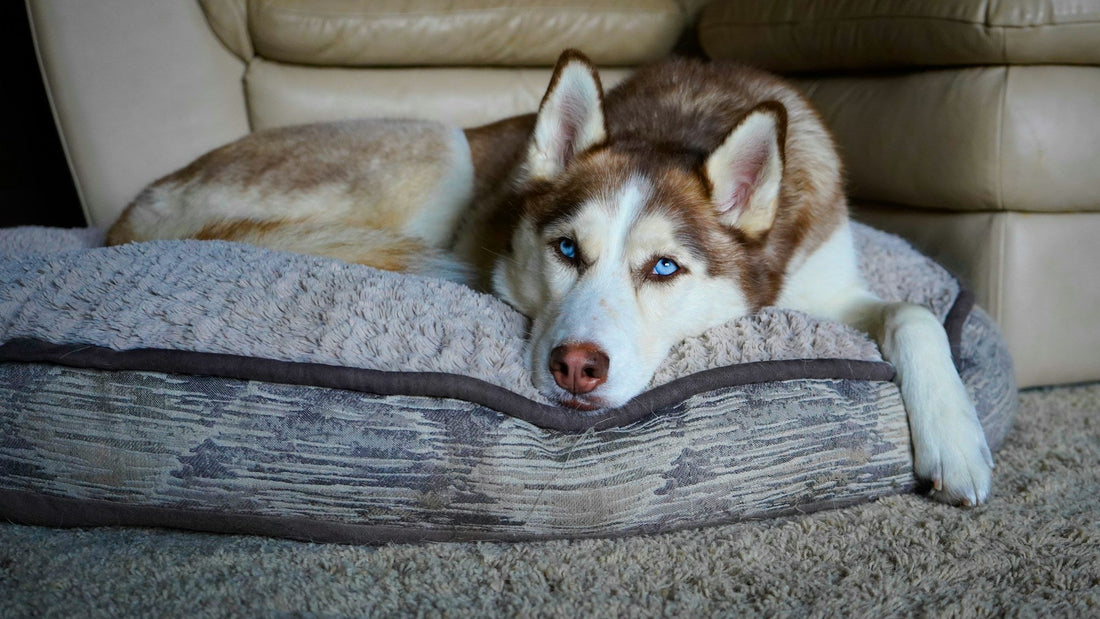
Raised edges can give a dog a place to lean. This may feel soothing for the head, neck, and shoulders. Some dogs like to rest their chin on the rim while keeping the rest of the body on the mattress.
A raised edge can also create a visual barrier. Dogs that startle easily may relax more when their sleeping space has a clear shape. The edge acts like a soft fence without fully covering the dog.
However, high bolsters are not ideal for every dog. A senior dog with weak legs may struggle to step over them. A dog with arthritis may need a low-entry bed with one open side.
The best choice depends on mobility, age, and sleep position. Look for soft support rather than stiff walls. The dog should be able to enter, turn, stretch, and leave with ease.
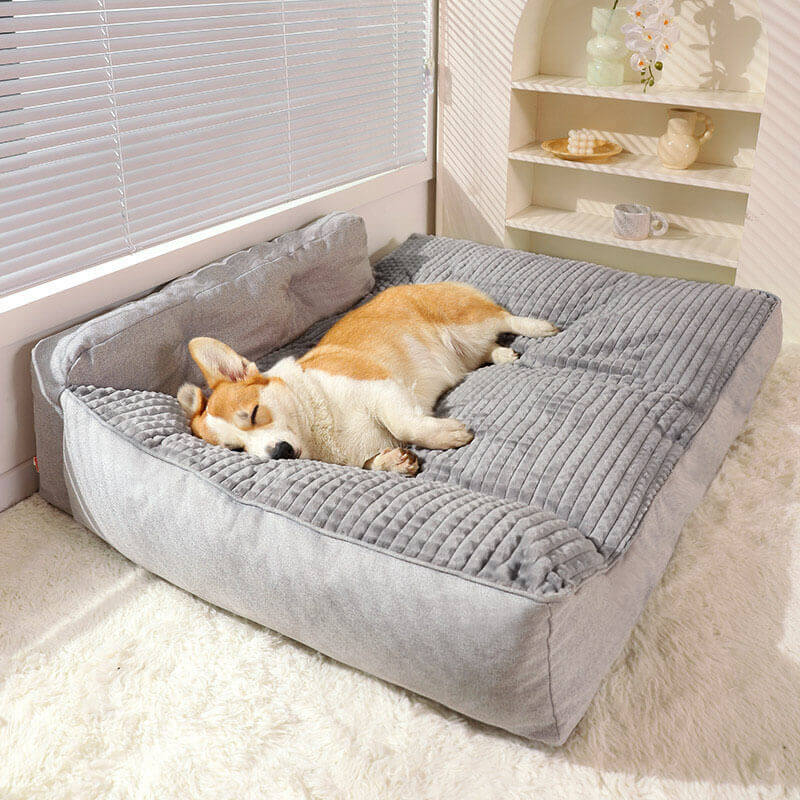
Is a Small Bed Actually Too Small?
The answer to why do big dogs like small beds should not make you ignore fit. A dog may love a small bed, but love alone does not prove that the bed supports the body. Measure your dog while it is sleeping in its favorite position.
Use this simple method:
- Measure from the nose to the base of the tail.
- Measure the dog from the floor to the top of the shoulders.
- Add about 6 to 12 inches to the length, depending on how much the dog stretches.
- Compare those measurements with the bed’s usable sleep area.
- Check the inside dimensions, not only the outside dimensions.
A curled sleeper may need less length than a dog that sprawls. Even so, the dog should not have to keep its legs folded tightly or place its head on the floor.
Signs of a poor fit include:
- The dog’s hips or shoulders hang over the edge
- The dog cannot turn around easily
- The spine stays curved in an unusual way
- The dog changes positions often
- The dog avoids the bed after trying it
- The dog seems stiff when standing up
A compact bed may be acceptable for short naps if the dog can move freely. For overnight sleep, choose enough room for the dog to change positions.
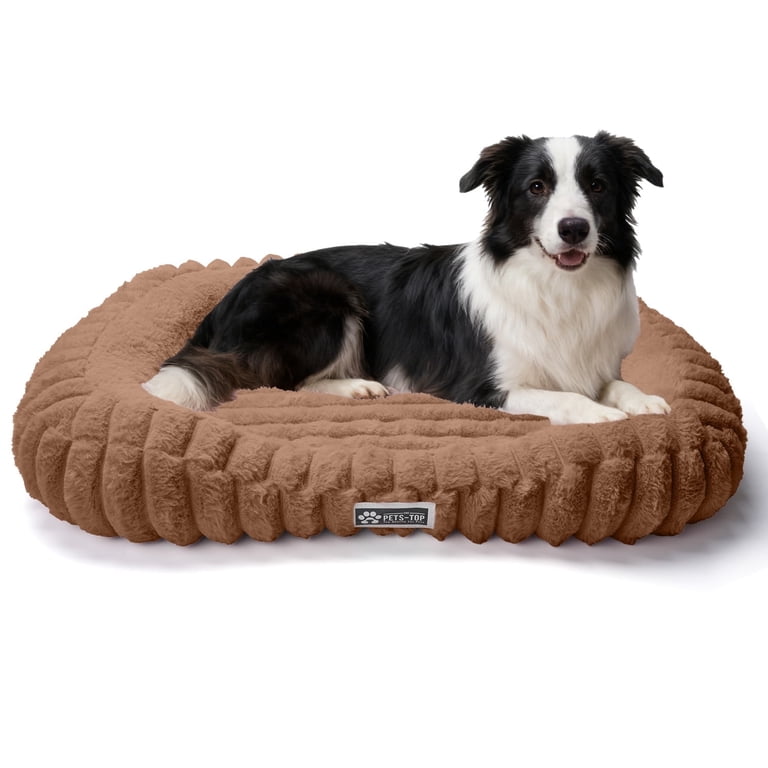
How Bed Size Affects Joint and Spine Health
A comfortable bed supports steady, even weight distribution. This matters for large breeds because their joints carry more load. A thin cushion or cramped sleep surface may increase pressure on the elbows, hips, and shoulders.
Large dogs are more likely to develop orthopedic problems such as hip dysplasia, elbow dysplasia, and arthritis. A bed cannot prevent these conditions, but good support may improve comfort. Veterinary advice should guide care when a dog shows pain or reduced movement.
Memory foam and dense orthopedic foam can help some dogs. The foam should compress slightly under the body but should not allow the dog to sink to the floor. Soft padding alone is not always better.
Look for these features:
- A firm, supportive base
- A washable, non-slip cover
- Low entry for older dogs
- Enough room for natural stretching
- Strong seams for heavy use
- Breathable materials for warm climates
Research on pet bedding is more limited than research on human mattresses. Product claims can also be overstated. Focus on measurable features, your dog’s response, and advice from a veterinarian when health problems are present.

Why Do Big Dogs Like Small Beds If They Usually Stretch Out?
Sleep position can change during the day. A dog may curl up in a small bed for a short nap, then stretch on the floor for deeper sleep. This does not always mean the dog dislikes the bed.
Dogs often choose different surfaces based on temperature and comfort. A small bed may work for curling, while a cool floor may feel better after exercise. Giving your dog more than one safe option is often the best solution.
Place a compact nest bed beside a larger flat mattress. This creates two choices:
- A snug space for curling and short naps
- A roomy space for stretching and overnight sleep
This approach respects the reason why do big dogs like small beds without forcing one bed to meet every need. Think of it like offering both an armchair and a full sofa. Each has a different purpose.
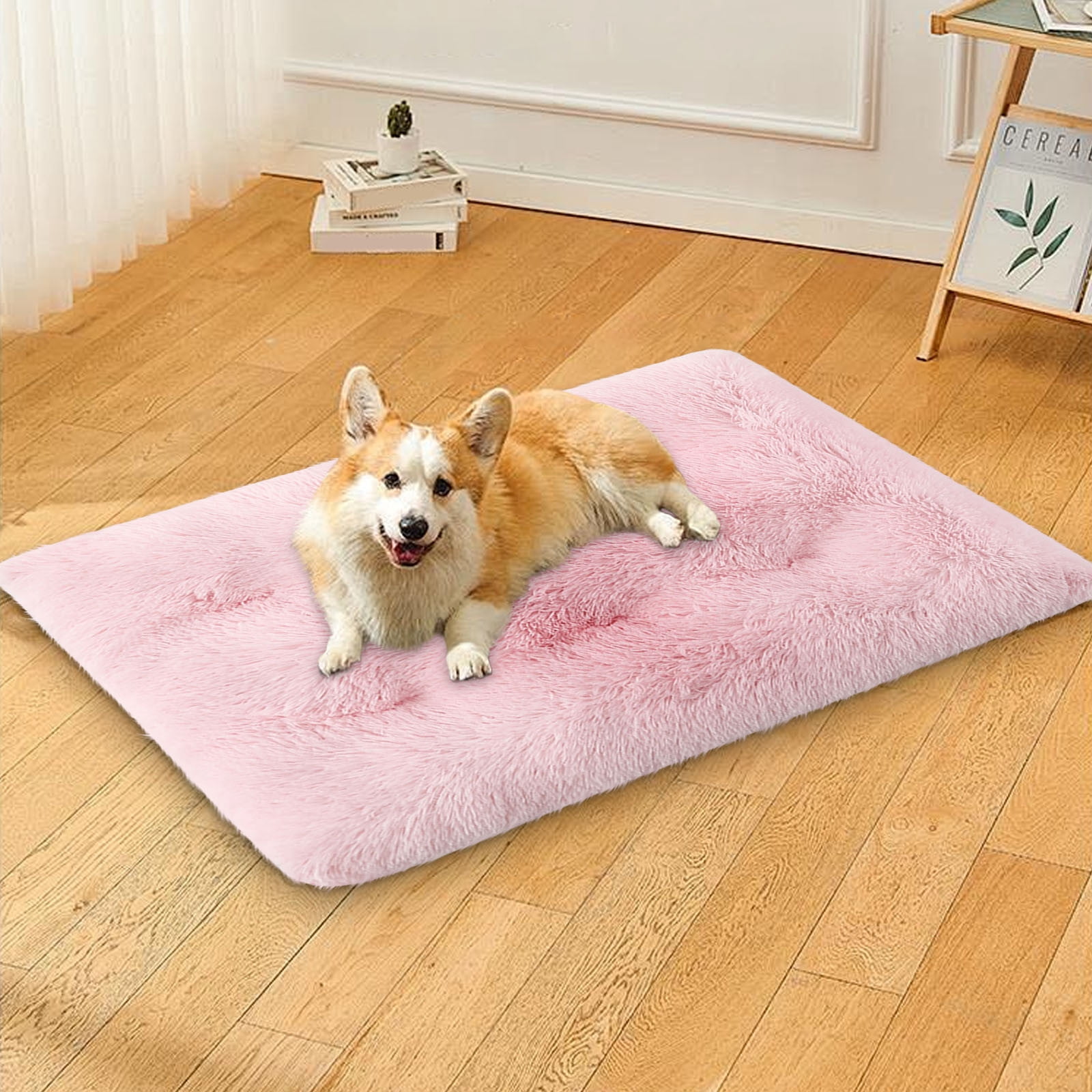
How to Choose a Bed for a Large Dog
Start with your dog’s habits, not the label on the package. A “large breed” bed may still have a small sleeping area because thick bolsters reduce usable space. Measure the inside surface before buying.
Use these guidelines:
- For curlers, choose a bed that supports the body with a little spare room.
- For sprawlers, choose a flat mattress that allows full extension.
- For seniors, select firm foam and a low step-in edge.
- For anxious dogs, consider soft bolsters or a covered design.
- For hot climates, choose breathable fabric and cooling materials.
- For dogs that chew, avoid loose filling and weak seams.
- For messy dogs, choose a removable, machine-washable cover.
Introduce a new bed slowly. Place it near the old bed and add a familiar blanket. Reward calm exploration, but do not force the dog to lie down.
If your dog repeatedly chooses the old small bed, compare location, smell, temperature, and surface feel. Size may be only one part of the issue.
Common Mistakes Dog Owners Make
One common mistake is buying the biggest bed available. More space is not always more comfort. Some dogs feel exposed on a wide, flat surface and prefer a defined sleeping zone.
Another mistake is measuring the dog but ignoring the fill. A thick bolster can remove several inches from the usable area. Always check the interior length and width after accounting for the sides.
Owners also sometimes choose a very soft bed for an older dog. If the dog sinks too deeply, standing up may become harder. A supportive foam base with a soft top layer is often more practical.
Avoid these mistakes:
- Replacing a loved bed without checking why the dog prefers it
- Putting the bed in a noisy or isolated location
- Using a bed that slides across hard floors
- Ignoring dampness, odor, or worn padding
- Assuming every sleeping problem comes from the bed
If your dog suddenly changes sleep habits, seems painful, limps, pants at rest, or struggles to rise, contact a veterinarian. A new bed may help comfort, but it cannot diagnose or treat an underlying condition.
A Practical Test for Your Dog’s Favorite Bed
You can learn a great deal by observing your dog for one week. Offer a roomy bed and the preferred small bed in the same location. Use similar blankets and keep the room temperature stable.
Record simple details:
- Which bed the dog chooses first
- How long the dog stays there
- Whether the dog curls, stretches, or hangs over the edge
- How easily the dog stands up
- Whether the dog returns to the bed after waking
This test helps separate emotional preference from physical comfort. If the dog chooses the small bed but sleeps with its legs hanging off, offer a larger bed with similar edges. If the dog chooses the small bed only when cold, improve warmth rather than reducing size.
A short observation period can prevent an expensive mistake. It also gives you useful information to share with your veterinarian if your dog develops stiffness or sleep changes.