Why Do Dogs Bark When They Sleep: Causes And Tips
Why do dogs bark when they sleep? Learn what dream barking means, when it is normal, and signs your dog may need veterinary care.
Dogs bark in their sleep because dream-related brain activity can trigger real sounds, movements, and vocal responses.
If you hear your dog bark, whine, or yip while sleeping, you may wonder whether something is wrong. In most cases, sleep barking is a normal part of dreaming, especially during the rapid eye movement (REM) stage of sleep. This guide explains why dogs bark when they sleep, how to tell normal dream behavior from a health concern, and what you should do when nighttime noises become frequent or intense.
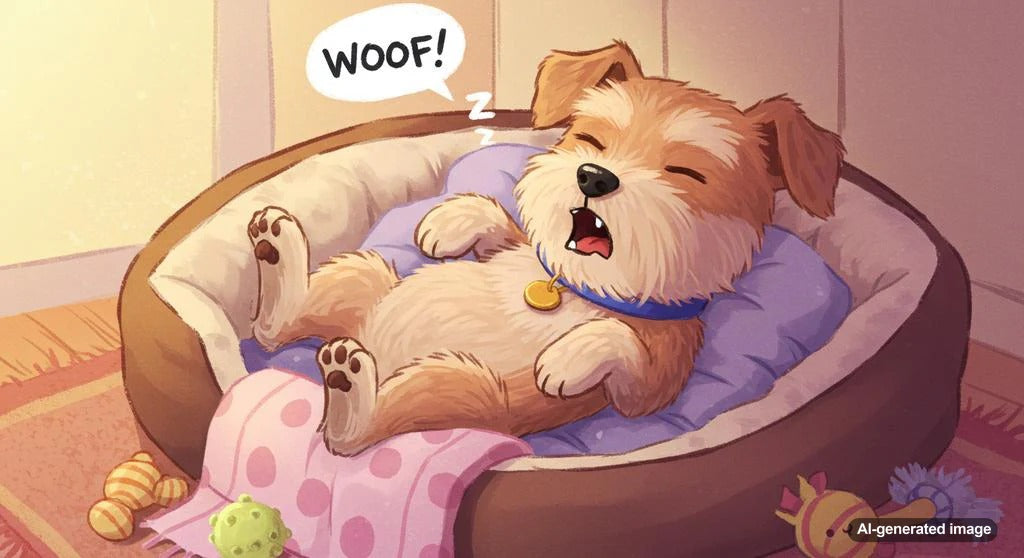
Why do dogs bark when they sleep?
Dogs bark when they sleep mainly because they are dreaming. Like people, dogs move through different sleep stages. During REM sleep, the brain becomes active while the body stays mostly relaxed. This is the stage linked with dreaming and many sleep sounds.
A sleeping dog may bark, whine, growl, twitch, paddle its paws, or move its eyes beneath its eyelids. These actions may reflect dream activity. Your dog could be dreaming about play, chasing, meeting another dog, or reacting to a familiar event.
Still, scientists cannot know exactly what a dog dreams about. We can only study brain activity, body movements, and behavior. Research suggests that dogs have sleep patterns similar to humans, but the story inside a dog’s dream remains unknown.
Sleep barking is often brief. A dog may give two or three soft yips and then settle again. Short bursts are usually less concerning than loud, repeated barking paired with stiff movements, distress, or breathing problems.
How dog sleep cycles cause barking
A dog’s sleep cycle includes light sleep, deep sleep, and REM sleep. Each stage serves a different purpose, and vocal behavior is more likely during REM sleep.
Light sleep
During light sleep, your dog may respond to small sounds. Its ears may move, and it may open its eyes briefly. At this point, the dog is not fully asleep, so barking may happen because it heard something in the home or outside.
Deep sleep
Deep sleep helps the body recover. Your dog’s breathing is often slow and steady. Muscles are usually relaxed, and there may be little movement.
REM sleep
REM sleep is the stage most linked with dreams. You may notice:
• Rapid eye movements under the eyelids
• Small paw twitches
• Lip movements
• Quiet whines or barks
• Tail movements
• Changes in breathing speed
This explains why dogs bark when they sleep, even when the room is quiet. Their brains may be processing memories or imagined events while their bodies remain at rest.
Puppies and young dogs may appear more active during sleep. Their brains process many new experiences each day. Older dogs may also sleep more deeply or show changes in sleep behavior as they age.
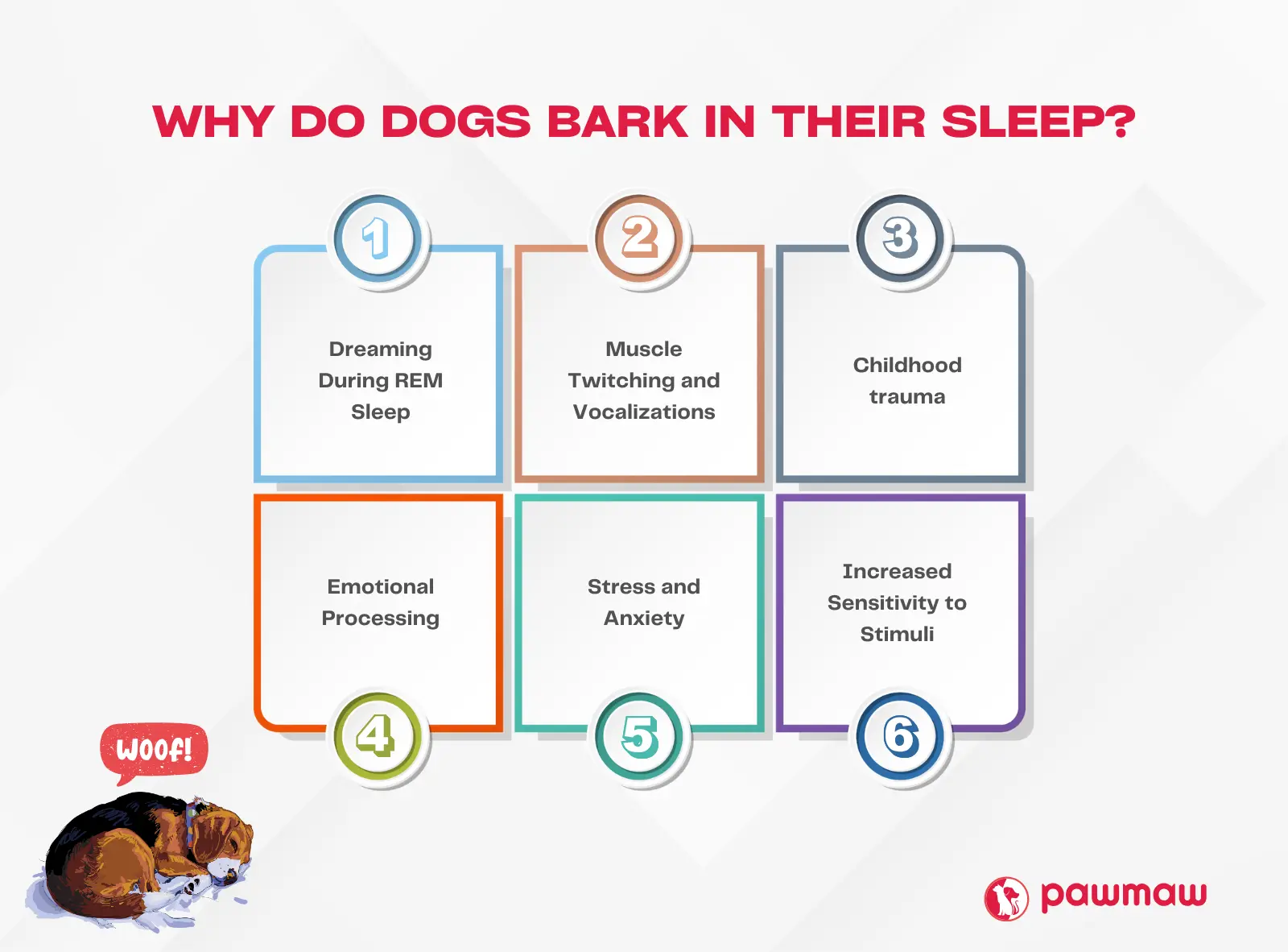
What might dogs dream about?
Dogs may dream about familiar experiences. Their dreams could involve running, playing, eating, exploring, or interacting with people and animals.
A dog that spends the day at the park may bark softly during sleep. A dog that played fetch may twitch its paws as if chasing a ball. A rescue dog may also show sleep behaviors linked to stress or past experiences, although we cannot confirm the exact dream content.
One useful way to think about dreams is to compare them with a mental scrapbook. During sleep, the brain may sort through pieces of the day. Some pieces may appear as movement or sound.
Common dream-related behaviors include:
• Soft barking or whining
• Short growls
• Paw paddling
• Nose twitching
• Tail wagging
• Chewing motions
• Sudden eye movement
These signs are usually normal when your dog wakes easily, acts well when awake, and returns to calm sleep.
Is sleep barking normal for every dog?
Most sleep barking is normal, but dogs vary. Breed, age, personality, daily activity, and health can all affect sleep behavior.
Small dogs may appear to bark more often because their sleep cycles can be shorter. Puppies may twitch and vocalize more than adult dogs. Some dogs are naturally noisy sleepers, while others remain almost silent.
A dog may also bark during sleep after an exciting day. A long walk, a visit from guests, training, or a new environment can create more mental activity. This does not mean the dog is unhappy. It may simply be processing a busy day.
However, a sudden change matters. If your quiet dog begins barking loudly every night, look for other changes. Pain, anxiety, illness, medication, or age-related brain changes may affect sleep.
Track the pattern for several nights:
- Note when the barking starts.
- Record how long it lasts.
- Watch for twitching, stiffness, or unusual breathing.
- Check how your dog behaves after waking.
- Write down any new foods, medicines, stressors, or injuries.
This simple record can help a veterinarian understand what is happening.

When sleep barking may signal a problem
Dogs bark when they sleep for normal reasons, but not every nighttime vocalization is a dream. Certain signs may point to pain, anxiety, breathing trouble, or a neurological problem.
Contact your veterinarian if sleep barking comes with:
• Stiff or violent body movements
• Repeated shaking that does not stop
• Loss of bladder or bowel control
• Drooling, foaming, or a fixed stare
• Trouble waking after an episode
• Confusion or weakness after waking
• Crying when touched
• Labored breathing or choking sounds
• Frequent night waking
• A sudden and lasting change in sleep behavior
Seizures can sometimes occur during sleep. They may include stiff limbs, rhythmic jerking, drooling, and confusion afterward. Not every twitch is a seizure, though. Brief, relaxed movements during REM sleep are common.
Pain can also disturb sleep. A dog with arthritis, an injury, dental pain, or stomach trouble may whine, bark, or change position often. Watch for limping, reduced appetite, hiding, panting, or reluctance to climb stairs.
Breathing problems deserve special attention. Loud snoring, gasping, pauses in breathing, blue or pale gums, and repeated choking sounds need prompt veterinary care. Flat-faced breeds can be more likely to have airway problems, but any dog can develop breathing trouble.
If an episode looks severe, keep your hands away from your dog’s mouth. Move nearby objects away, time the event, and contact a veterinarian. A video can be very helpful for diagnosis.
Should you wake a barking dog?
Usually, you should not wake a dog during a normal dream. Sudden touching can startle a sleeping dog. Even friendly dogs may snap when they wake in confusion.
Instead, follow these steps:
• Watch from a safe distance.
• Keep the room quiet.
• Remove children and other pets from the area.
• Let the episode end on its own.
• Use a soft voice only if your dog seems distressed.
• Avoid shaking, grabbing, or placing your face near the dog.
If you must wake your dog, call its name gently from a short distance. Turning on a light or making a soft sound may be safer than touching.
A common mistake is assuming every sleep bark means a nightmare. In many cases, the dog is simply dreaming. Another mistake is ignoring a major behavior change because the dog “just sleeps loudly.” The best approach is calm observation.

How to reduce disruptive sleep barking
You may not be able to stop normal dream barking completely. You can, however, support better sleep and reduce stress.
Create a steady bedtime routine
Dogs often rest better with a predictable schedule. Offer a bathroom break, a calm walk, and quiet time before bed. Keep feeding and sleeping times fairly consistent.
Provide daytime exercise
Physical activity can support healthy sleep. Match exercise to your dog’s age, breed, and health. A senior dog may need gentle walks, while a young working dog may need more play and mental tasks.
Avoid intense exercise right before bedtime if it makes your dog excited. A calm sniffing walk may work better than a fast game of chase.
Add mental enrichment
Puzzle toys, scent games, short training sessions, and safe chewing activities can help your dog use its mind. Mental enrichment may reduce boredom and restlessness.
Do not introduce a difficult puzzle late at night if it causes frustration. The goal is calm engagement, not more excitement.
Improve the sleeping space
Give your dog a comfortable bed in a quiet area. Keep the room at a comfortable temperature. Reduce sudden noise from televisions, traffic, or household activity.
Older dogs may benefit from an orthopedic bed. Dogs with anxiety may settle better with a familiar blanket or a room away from busy areas.
Reduce stress
Changes in the home can affect sleep. Moving furniture, welcoming a new pet, loud storms, or separation may lead to more vocal behavior. Use gradual training and positive rewards rather than punishment.
Punishing a dog for barking in its sleep can increase fear. Your dog is not choosing to annoy you. It may not even know it made a sound.

What a practical sleep log can reveal
A sleep log is one of the easiest tools for understanding why dogs bark when they sleep. It can show whether the behavior is random, linked to activity, or connected to another symptom.
Record these details:
• Date and time
• Length of the barking
• Volume and type of sound
• Body movements
• Breathing pattern
• Events earlier that day
• Food, medicine, or supplements
• Behavior after waking
For example, you may notice that barking happens after unusually active days. You may also discover that it occurs only when your dog sleeps near a noisy window.
A short video can add useful detail. Film from a safe distance and avoid waking your dog. Do not post the video as a diagnosis substitute. A veterinarian should interpret concerning episodes alongside your dog’s full medical history.
The main limitation is that sleep sounds alone cannot reveal a dog’s dream or confirm a medical issue. Context matters. A calm dog that wakes normally is different from a dog that becomes confused, rigid, or weak afterward.

When to call a veterinarian
Call your veterinarian if you feel unsure, especially when the behavior is new or worsening. A professional may ask about your dog’s age, breed, medicines, health history, and daily routine.