Why Do Dogs Hair Stand Up When Barking: Explained
Why do dogs hair stand up when barking? Learn what raised hackles mean, how dogs communicate, and when this behavior may signal stress or fear.
Introduction
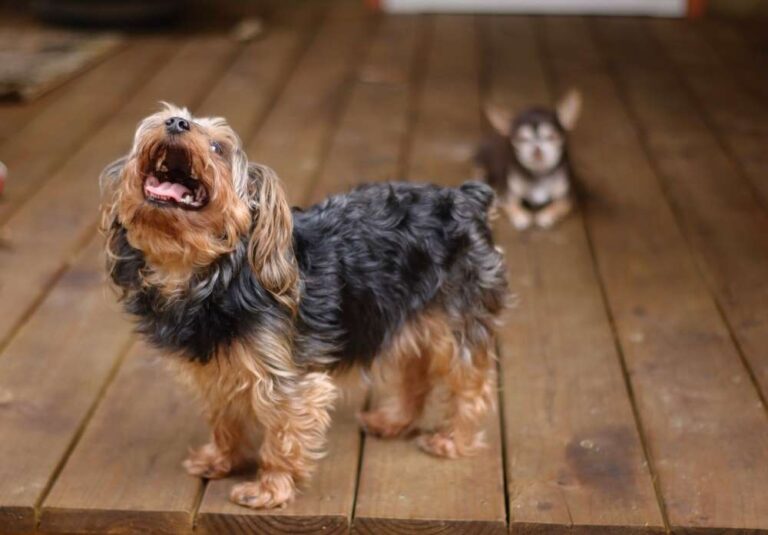
Across the United States, many dog owners notice a strip of raised hair along a dog’s neck or back when the dog barks. This is called piloerection, or “raised hackles.” It means the dog’s body is reacting to strong emotion or stimulation. It does not prove that the dog is angry or ready to attack.
Dogs may raise their hair while barking because they feel afraid, excited, alert, frustrated, or threatened. The bark is only one part of the display. To understand what your dog feels, look at the whole body, the setting, and what happens next.

The short answer: Why does a dog’s hair stand up when barking?
A dog’s hair stands up when barking because its sympathetic nervous system activates. This system controls the body’s quick “fight, flight, or freeze” response.
Small muscles at the base of each hair contract. This pushes the hair upright, much like goosebumps in people. Dogs cannot raise their hackles on purpose. The reaction happens automatically.
Barking may trigger this response when a dog sees:
- A stranger near the home
- Another dog
- A delivery worker
- A wild animal
- An unfamiliar object
- A situation that feels unsafe
- Something exciting, such as a favorite toy
The raised hair shows arousal, not one specific emotion. In dog behavior, arousal means the dog is highly activated or alert. That energy may come from fear, play, anger, curiosity, or excitement.

What are “raised hackles” on a dog?
“Raised hackles” is the common term for piloerection. It usually appears as a ridge of fur along the dog’s neck, shoulders, spine, or tail.
The ridge may be easy to see on short-haired dogs. It can be harder to spot on dogs with long, thick, or curly coats. Some breeds also have naturally dense or uneven fur, which can make the hair look raised even when the dog is calm.
The hair itself is not the message. It is more like a warning light on a car dashboard. It tells you that something is happening inside the dog, but it does not tell you the exact cause.
A dog with raised hackles may be:
- Nervous
- Defensive
- Excited
- Frustrated
- Startled
- Ready to play
- Highly focused
The American Veterinary Medical Association and veterinary behavior resources advise reading a dog’s full body language instead of judging one sign alone. Raised hair should be viewed with the dog’s ears, eyes, mouth, tail, posture, and movement.

Does raised hair mean a dog is aggressive?
No. Raised hair does not always mean aggression.
A fearful dog may raise its fur while trying to look larger. An excited dog may raise its fur when barking at a squirrel. A frustrated dog may do it while pulling toward another dog. Some dogs show raised hackles during play, especially when play becomes intense.
Aggression becomes more concerning when raised hair appears with several other warning signs, such as:
- A stiff, still body
- A hard stare
- A closed, tight mouth
- Lips pulled back
- Growling
- Snapping
- Lunging
- Weight shifted forward
- A high, rigid tail
- Blocking a person or dog’s path
Fear may look different. A fearful dog may keep its body low, tuck its tail, flatten its ears, lick its lips, yawn, turn away, or try to escape. Some frightened dogs bark and move backward at the same time.
The key point is simple: raised hair tells you that the dog is aroused. The rest of the body helps explain why.

How to read a dog that is barking with raised hackles
Start with the situation, then observe the dog from a safe distance. Do not move closer just to test the dog’s reaction.
| Body language | More likely meaning | Safe response |
|---|---|---|
| Loose body, open mouth, play bow | Excitement or play | Give space and lower the energy |
| Stiff body, direct stare, forward weight | Threat or conflict | Move away calmly |
| Low body, tucked tail, backward movement | Fear or distress | Increase distance and avoid pressure |
| Fast movement, whining, pulling | Frustration or high excitement | Remove the trigger and help the dog settle |
| Sniffing, looking away, relaxed tail | Curiosity or mild alertness | Allow the dog to observe from a safe distance |
| Raised hair with pain, confusion, or unusual behavior | Possible medical or emotional issue | Contact a veterinarian if it continues |
Look at the tail
A wagging tail does not always mean friendliness. A loose, sweeping wag often differs from a fast, stiff wag. A tucked tail may show fear, while a high and rigid tail can signal intense alertness or confidence.
Look at the ears
Ears held forward may show focus. Ears pinned back may show fear, stress, or appeasement. Some dogs have floppy ears, cropped ears, or heavy fur, so ear position may be hard to read.
Look at the mouth
A relaxed, open mouth often differs from a tight, closed mouth. Lip licking, yawning, and repeated swallowing can appear during stress. A curled lip or exposed teeth is a clearer warning sign.
Look at movement
Movement often gives useful clues. A dog that can turn away, sniff, or walk off may have more control than a dog that freezes, lunges, or rushes toward the trigger.
If you are unsure, treat the display with caution. Give the dog more space rather than trying to pet, restrain, or correct it.

Common reasons dogs bark with raised hackles
Fear or uncertainty
A dog may bark at a person, dog, sound, or object it does not understand. Raising the hair may make the dog appear larger. Barking may also help create distance.
Common triggers include fireworks, storms, construction noise, hats, umbrellas, and unfamiliar visitors.
Territorial behavior
Dogs may bark when someone approaches the house, yard, car, or family members. The dog may feel responsible for warning others away.
Territorial barking can become stronger when the dog repeatedly practices it. If barking makes a person leave, the dog may learn that barking worked, even if the person was simply continuing down the sidewalk.
Excitement
Some dogs raise their hair during highly exciting events. This can include greeting a family member, seeing another dog, preparing for a walk, or chasing a toy.
Excitement can still become unsafe. A friendly dog may knock someone down, redirect a bite toward a nearby person, or start a fight if arousal rises too high.
Frustration
A dog may bark and raise its fur when it wants something but cannot reach it. A leash, fence, window, crate, or closed door can create this response.
Fence running is a common example. The dog may appear aggressive at the fence but behave differently once the barrier is removed. That does not make the behavior safe, but it shows why the trigger and setting matter.
Pain or illness
Pain can make a dog more reactive. A dog that suddenly barks at familiar people, guards part of its body, or reacts when touched may need a veterinary check.
Piloerection alone is not a diagnosis. However, sudden behavior change, confusion, weakness, collapse, trouble breathing, seizures, or severe pain needs prompt veterinary care.

What should you do when your dog’s hair stands up?
Use distance first. Distance lowers pressure and gives the dog a chance to calm down.
- Stop moving toward the trigger. Do not force a greeting.
- Create space. Cross the street, step behind a barrier, or leave the area.
- Keep the leash steady. Avoid harsh jerks, choking, or repeated corrections.
- Use a calm voice. Loud scolding can increase fear and arousal.
- Wait for the dog to settle. Look for softer muscles, normal breathing, and the ability to respond to you.
- Reward calm behavior. Give a treat when the dog notices the trigger and remains relaxed.
- Record the pattern. Note the trigger, distance, time, body language, and recovery time.
Do not punish raised hackles. You cannot punish the hair back down, and punishment may make the dog link the trigger with pain or fear. That can increase the risk of a stronger reaction later.
If your dog regularly barks at people or dogs, work with a qualified trainer or a veterinary behavior professional. Choose someone who uses reward-based methods and can manage safety around the trigger.

When should you call a veterinarian or behavior professional?
Contact your veterinarian if the behavior is new, sudden, severe, or linked with signs of pain or illness. A medical problem can affect behavior, and a vet can help rule out physical causes.
Seek professional behavior help if your dog:
- Has tried to bite
- Lunges at people or dogs
- Cannot calm down after the trigger leaves
- Guards the home or yard intensely
- Reacts in more places over time
- Is difficult to control on leash
- Has caused injury
- Shows fear that limits daily life
A veterinarian may refer you to a certified veterinary behaviorist. A qualified reward-based trainer can also help with management and training. In the United States, look for clear credentials, humane methods, and a plan that explains how to prevent another incident.
Until you get help, avoid crowded areas and close contact with unfamiliar people or dogs. Use secure equipment that fits correctly. If there is a bite risk, ask a professional to help you introduce a properly fitted basket muzzle through slow, reward-based training.

Does breed affect raised hackles?
Breed can affect how easy raised hair is to see, but it does not determine what the dog feels.
Short-haired dogs may show the ridge clearly. Long-haired dogs may show little visible change even when they are highly aroused. Some dogs have natural fur patterns along the neck or back that resemble raised hackles.
Breed alone cannot tell you whether a dog is friendly, fearful, or aggressive. Individual history, training, health, genetics, environment, and the current trigger all matter.

Key takeaways
- Raised hair is called piloerection or raised hackles.
- It happens when small muscles at the hair roots contract.
- Barking with raised hair means the dog is highly aroused, not automatically aggressive.
- Fear, excitement, frustration, territorial behavior, and pain can all play a role.
- Read the full body, not just the fur.
- Give the dog space and avoid punishment.
- Contact a veterinarian for sudden changes or signs of illness.
- Get behavior help if the dog lunges, bites, or cannot calm down.
Frequently asked questions
Why do dogs’ backs rise when they bark?
The dog’s sympathetic nervous system activates, causing small muscles under the skin to lift the hair. The bark may happen at the same time because the dog is reacting to a strong feeling or trigger.
Can a friendly dog have raised hackles?
Yes. Friendly dogs may raise their hair when excited, surprised, frustrated, or deeply focused. The rest of the body shows whether the dog is relaxed, playful, fearful, or threatening.
Why does my dog raise its hair at other dogs?
Your dog may feel fear, excitement, frustration, or social tension. Leashes and fences can increase frustration because the dog cannot move freely. Increase distance and avoid forcing a greeting.
Should I pet a dog with raised hackles?
No. Do not pet an unfamiliar dog with raised hair unless the owner and the dog’s body language clearly show comfort. Give the dog space and let the owner manage the interaction.
Can raised hackles mean my dog is sick?
Raised hackles alone usually do not show illness. But sudden behavior changes, pain, weakness, confusion, breathing trouble, or unusual sensitivity should be checked by a veterinarian.
Conclusion
Dogs raise their hair when their bodies become highly activated. Barking may be part of the same response, but raised hackles do not identify one emotion by themselves.
Watch the full body, consider the trigger, and give the dog room to settle. If the reaction is sudden, dangerous, or hard to manage, begin with a veterinary check and seek reward-based behavior support.

Pet Care Writer & Researcher
Daniel writes practical guides on daily care, feeding, and safety, turning complex topics into simple, actionable advice.